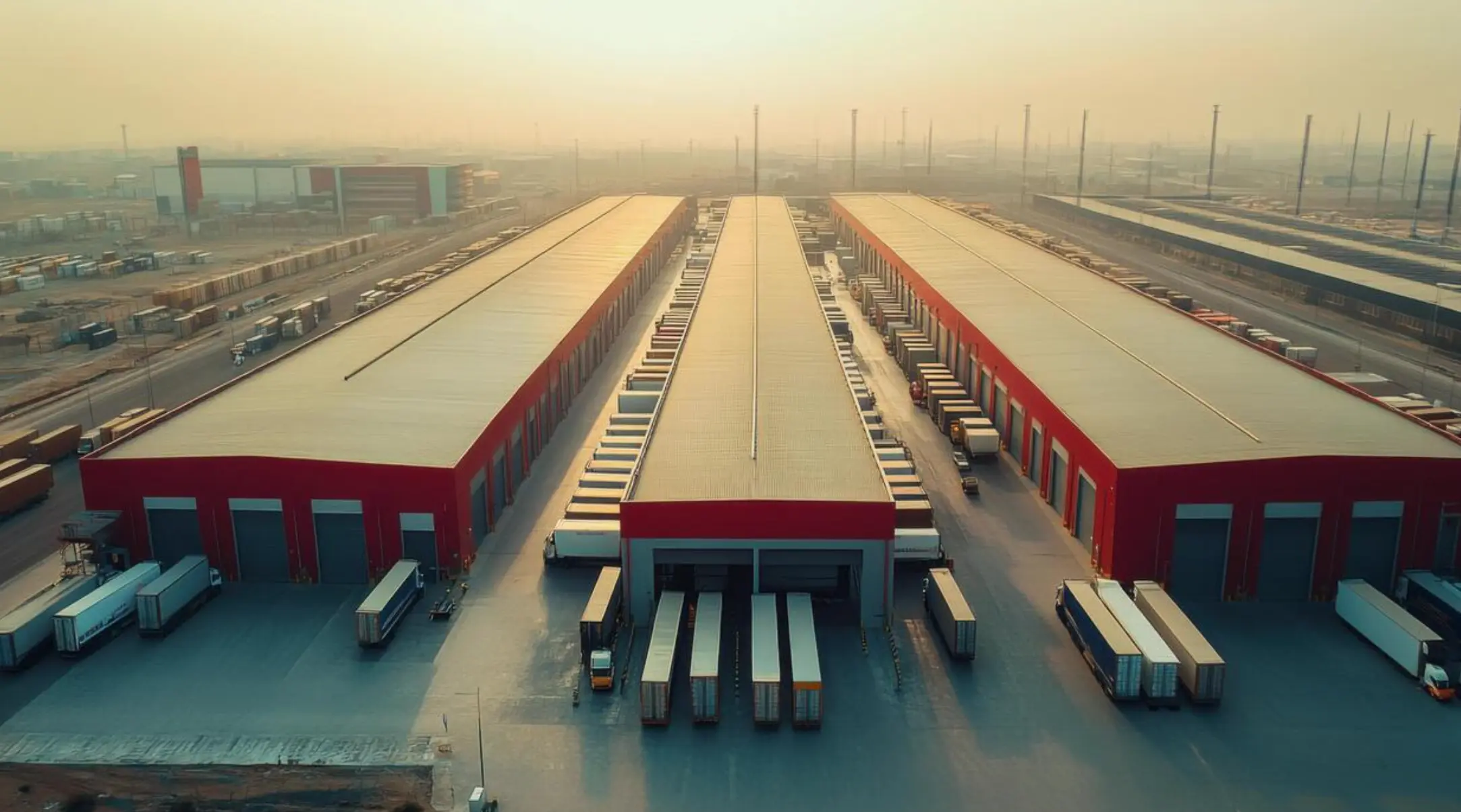

Dock scheduling software is often evaluated like a standalone tool: appointment slots, carrier emails, a calendar view, and maybe detention reporting. However, the best dock scheduling software is rarely the one with the prettiest UI. It is the one that can maintain planning integrity while the yard behaves like the yard.
In practice, dock scheduling only works as well as the execution layer behind it. And that’s where many operations hit the same wall: the warehouse and the highway are digitized, but the yard is still the place where data goes missing. This yard digitization gap matters more than most teams want to admit.
North America has tens of thousands of warehouses and factories, and an enormous amount of value moves through them every day. Yet many sites still rely on clipboards, radio calls, manual check-in logs, and tribal knowledge to decide what is actually on the property, where it is parked, and whether it is ready to stage to a door.
If you are searching for a solution that goes beyond just better calendar management, you are trying to increase throughput with the labor you already have, reduce detention and dwell, and stop the daily fire drills that happen between gate and dock. This guide lays out the technical and operational criteria that separate basic scheduling tools from systems that actually improve flow.
Scheduling is a control mechanism designed to convert uncertain arrival patterns and variable loading times into a manageable plan. But in a live yard environment, this plan often fails due to predictable reasons such as arrival variance, non-deterministic unload/load times, yard opacity, and manual orchestration.
To address these issues effectively, it’s essential to treat dock scheduling as one component of a larger yard execution strategy. This approach not only transforms loading dock operations, but also highlights why yard management software solutions are crucial in bridging the yard digitization gap.
Ultimately, digital dock scheduling software should be seen as part of a broader strategy aimed at improving overall operational efficiency rather than merely a band-aid for broken visibility.
What “best” means in dock scheduling: key criteria that actually change outcomes
Most dock scheduling feature lists look similar. The differences that matter show up in execution, data, and integration. Here are the criteria that separate surface-level scheduling from a real throughput lever.
1) Planning depth: can it schedule the right thing, not just a time slot?
A mature dock scheduling capability should support:
Load-level and order-level context: PO/ASN references, product attributes, temperature requirements, hazmat flags, and customer priority.
Resource-aware constraints: door type compatibility, equipment (e.g., clamp truck availability), labor pools, and shift rules.
Appointment normalization: ability to define standard work for common move types so the system does not treat every appointment as identical.
Dynamic buffers: configurable slack based on historical variability, not static slot lengths.
Operations that are already proficient in WMS/TMS know this pattern well. The difference is that dock scheduling must account for physical constraints at the dock, and the stochastic nature of arrivals.
2) Execution linkage: can the system verify and enforce the schedule in real time?
This is the part most tools underdeliver on.
A schedule is only as good as your ability to confirm:
Did the trailer actually arrive?
Is it the correct trailer (asset identity accuracy matters)?
Where is it now?
Is it live, drop, or staged?
Is it empty, loaded, partially loaded, sealed, damage-flagged, or on hold?
If those answers are delayed or wrong, your schedule becomes reactive. Your dock team starts sequencing based on whoever is physically visible, not what the plan says should happen next.
The “best dock scheduling software,” in practical terms, is the one that connects planning to verified execution signals, ideally automatically.
3) Gate and yard integration: does it span the operational bottleneck between highway and warehouse?
Many organizations have invested heavily in WMS and TMS over the past decade. While this has improved warehouse process control and transportation planning, it has not solved the gate-to-dock gap.
The result is a classic scenario:
TMS says the load is arriving.
WMS is ready to receive it.
The yard cannot locate it quickly, cannot confirm status, or cannot stage it efficiently.
Labor gets burned searching, waiting, or expediting.
So, when evaluating dock scheduling, treat “integration” as more than API connectivity. You want a unified operational model where the yard is not a blind spot. This is exactly why yard execution platforms exist: to turn the yard into a measurable, automatable part of the supply chain rather than an informal buffer.
4) Data model and analytics: can it produce defensible metrics, not just reports?
If you are serious about throughput, you need measurement that holds up in a review with finance, ops, and carriers. Look for:
Event-level timestamps: arrival, check-in, yard-in, door assignment, dock-in, start, end, yard-out, check-out.
Detention and dwell attribution: carrier-caused vs facility-caused, with an auditable timeline.
Constraint analysis: which doors, shifts, or move types are consistently exceeding plan.
Network rollups: for multi-site operators, single-site analytics are necessary but not sufficient.
This matters even more right now because logistics demand remains strong, square footage continues to grow, and labor supply is not scaling at the same rate. When workforce availability is tight, throughput becomes a decision intelligence problem rather than just a staffing issue. Leveraging AI supply chain software can significantly enhance efficiency and visibility in this context. Moreover, employing logistics optimization software can further streamline operations and boost overall supply chain efficiency.
5) Automation readiness: can it reduce manual touches without creating fragile processes?
Automation is not “remove people.” It is “remove low-value work that creates variability.”
For dock scheduling and yard flow, that means:
reducing manual check-in and phone calls,
eliminating “hunt and find” trailer searches,
auto-assigning parking and doors based on rules,
dispatching spotter moves with clear priorities,
using verification steps only when risk is high.
The best systems use configurable rules engines rather than hard-coded logic, because every yard has its own constraints, security profile, and peak patterns.
Why dock scheduling fails when the yard is a data black hole
A lot of teams try to fix dock congestion by tightening appointments. That can help, but it often fails in high-traffic, multi-shift yards.
Here is the root issue: scheduling is upstream control, but congestion is usually downstream execution.
If your yard lacks reliable, real-time visibility, you get:
“ghost trailers” that are on the schedule but not physically present,
trailers present but unaccounted for in the system,
mislabeled equipment in the log,
long spotter cycle times because moves are not prioritized or orchestrated,
wasted door time because the next trailer is not staged.
In other words, your dock schedule becomes an aspirational document, and your actual sequencing is dictated by whoever can be found the fastest.
The gap gets worse at scale. Operators with 5+ warehouses across North America are not just dealing with one site’s quirks. They are dealing with inconsistent yard practices, inconsistent data capture, and inconsistent ability to measure what is happening between gate and dock.
The modern approach: pair dock scheduling with a Yard Operating System (YOS)
If your goal is true throughput improvement, you want dock scheduling to sit inside a yard execution layer that can:
digitize yard inventory (what assets are on-site),
track locations in real time (where they are),
orchestrate moves (what should move next and why),
automate gate workflows (who is arriving, and can they be processed faster),
integrate with WMS/TMS (so upstream planning matches downstream reality).
This is the core idea behind a Yard Operating System: an end-to-end execution platform for the yard that bridges the bottleneck between highway and warehouse.
Where Terminal fits (and when it actually matters)
Terminal Industries builds Terminal Yard Operating System™ (YOS), positioned as an AI-native yard execution platform for operators who need measurable throughput gains and repeatable ROI across a yard network. This Yard Management Software is designed to address the complexities of modern logistics.
Terminal’s approach is relevant when dock scheduling alone is not the bottleneck solver, especially for sites with:
25+ dock doors,
50+ parking spots,
2+ shifts per day,
mid- to high-traffic flow,
and multiple yards that need a consistent operating standard.
At that scale, the fastest wins often come from removing yard uncertainty, not from adding more rules to the appointment calendar.
However, it's crucial to recognize the hidden costs of outdated yard management software which can hinder your operational efficiency.
What makes a dock scheduling solution “enterprise-grade” in the yard context
For advanced operators, “enterprise-grade” should mean more than SSO and uptime. It should mean performance under real yard conditions.
Here is a practical checklist.
A) High-integrity asset identification
If the system cannot accurately identify assets at the gate and in-yard, everything downstream degrades.
Terminal’s model here is worth understanding: its proprietary computer vision capabilities are designed to deliver very high accuracy in asset data capture, so appointment records match physical reality.
B) Gate workflows that reduce friction without reducing control
The best yards do not trade security for speed. They separate normal flows from exceptions.
Look for:
automated or remote-assisted check-in/check-out,
configurable verification for high-value loads,
rule-based triggers for additional security steps.
Terminal supports configurable workflows, including enhanced verification rules for high-risk loads, and a blacklist-style approach for proactive detection of unauthorized equipment.
C) Real-time yard inventory and location awareness
For dock scheduling, this is the difference between “door assigned” and “door actually utilized.”
If the system can reduce asset search time, you unlock door capacity you already have.
Terminal highlights large reductions in asset search time through AI/CV-backed yard visibility, which directly supports faster staging and fewer “dead minutes” at the dock.
D) Orchestrated moves and spotter tasking
Scheduling is only “real” when the yard can execute the next move predictably.
You want:
prioritization logic tied to appointments and dock readiness,
clear task dispatch,
location assignment logic based on asset/load attributes.
Terminal’s Asset Movement capability is designed around orchestrating yard moves with rule-based location preferences and attribute-driven staging.
E) Network-level scalability and governance
Multi-site operators need:
a unified view across yards,
consistent KPI definitions,
the ability to roll out improvements without reinventing each site.
Terminal’s Yard Networks concept aligns with this need: a single-pane-of-glass operational view that supports scale across a network of yards.
Implementation reality: what to validate before you buy
Good software fails when the site is not ready. For yard and dock workflows, technical fit is real.
Validate these early:
Lighting and camera sightlines: especially if you are using vision-based identification.
Power and connectivity: reliable uptime at gate and key yard zones.
Latency tolerance: if workflows depend on real-time decisions, network performance matters.
Integration scope: confirm what events and objects will be exchanged with WMS/TMS and access control systems.
Terminal’s deployment model is designed to reduce IT lift through modular hardware and rapid setup, but you still want a site readiness checklist and a clear integration plan.
How to think about ROI for dock scheduling (without fooling yourself)
The ROI story is rarely just “less detention.”
A strong business case typically stacks multiple value streams:
Throughput lift: more loads processed per door per shift.
Reduced dwell and detention: fewer chargebacks, fewer disputes, better carrier relationships.
Labor productivity: fewer trailer searches, fewer radio calls, fewer manual logs.
Asset utilization: better use of parking, doors, and spotter capacity.
Risk reduction: fewer unauthorized exits, less cargo theft exposure, stronger audit trails.
Terminal positions rapid ROI in under five months for the right yard profiles, which is plausible when you combine throughput gains with measurable reductions in detention, search time, and manual work.
The key is measurement discipline. If you cannot baseline event timestamps today, start there. Without a baseline, every ROI estimate becomes a debate.
A practical “best dock scheduling software” decision framework (for advanced operators)
If you are already proficient in WMS/TMS and operational analytics, here is a clean way to decide what you actually need.
Step 1: Identify the failure mode
Are you oversubscribed at the dock (true capacity constraint)?
Or are you losing capacity because the yard cannot stage and sequence reliably (execution constraint)?
Or are carriers non-compliant (control constraint)?
Step 2: Map required signals
List the signals you need for scheduling to stay aligned with reality:
verified arrival and identity,
verified location,
status (loaded/empty/hold),
dock readiness,
move completion.
If you cannot reliably capture these signals today, the “best dock scheduling software” for you is one that comes with or sits on top of a yard execution layer.
Step 3: Decide whether you need a YOS-level platform
If you operate a high-traffic yard network, it is usually more effective to implement an end-to-end Yard Operating System that includes scheduling-relevant execution workflows, rather than bolting scheduling onto a manual yard. This is where Yard Operating System™ (YOS) comes into play. It bridges gate-to-dock with real-time visibility and automation so your schedule is not constantly renegotiated on the yard radio.
Closing: the “best” dock scheduling software is one that makes the yard legible
While dock scheduling is important, it is not the whole problem. The most sophisticated appointment logic cannot compensate for missing execution data. If your yard is still a tech black hole, the best next step is not just a better calendar. Instead, focus on making the yard legible: accurate asset identity, real-time inventory, orchestrated movement, and automated gate workflows that connect directly to your dock plan.
This strategic shift towards a smarter yard execution platform can turn dock scheduling from a daily negotiation into an operational advantage. By leveraging Yard Management Software, agentic AI, and AI-driven YMS solutions, you can significantly improve both dock scheduling and asset utilization.
FAQs (Frequently Asked Questions)
What distinguishes the best dock scheduling software from basic scheduling tools?
The best dock scheduling software goes beyond a simple calendar view or appointment slots. It maintains planning integrity despite yard variability by integrating execution verification, yard digitization, and operational constraints to improve throughput and reduce delays.
Why is yard digitization critical in dock scheduling and warehouse operations?
Yard digitization fills the gap between warehouse and highway systems by replacing manual processes like clipboards and radio calls with real-time data on trailer location, status, and readiness. This visibility reduces data loss, improves staging efficiency, and minimizes detention and dwell times.
What key features should mature dock scheduling software support for effective planning?
Mature dock scheduling software supports load-level and order-level context (PO/ASN references, temperature needs), resource-aware constraints (door compatibility, equipment availability), appointment normalization to standardize common move types, and dynamic buffers based on historical variability to handle stochastic arrivals.
How does execution linkage enhance the effectiveness of dock scheduling systems?
Execution linkage enables real-time verification of trailer arrival, identity accuracy, location status (live, drop, staged), and load condition. This ensures schedules are enforced accurately rather than reactive sequencing based on physical visibility alone, thereby improving operational flow at the dock.
Why is integration between gate, yard, WMS, and TMS essential in dock scheduling?
Integration creates a unified operational model that eliminates the yard as a blind spot. While WMS and TMS manage warehouse and transportation respectively, linking them with yard management enables quick trailer location, status confirmation, efficient staging, and reduces labor inefficiencies caused by searching or waiting.
What role do data models and analytics play in evaluating dock scheduling performance?
Robust data models provide defensible metrics rather than just reports. Accurate measurement of throughput-related KPIs allows organizations to review performance with finance stakeholders confidently and make informed decisions to optimize labor utilization, reduce detention costs, and improve overall operational efficiency.


