
“End-to-end visibility” is one of those phrases everyone agrees on, until you ask where the visibility actually breaks.
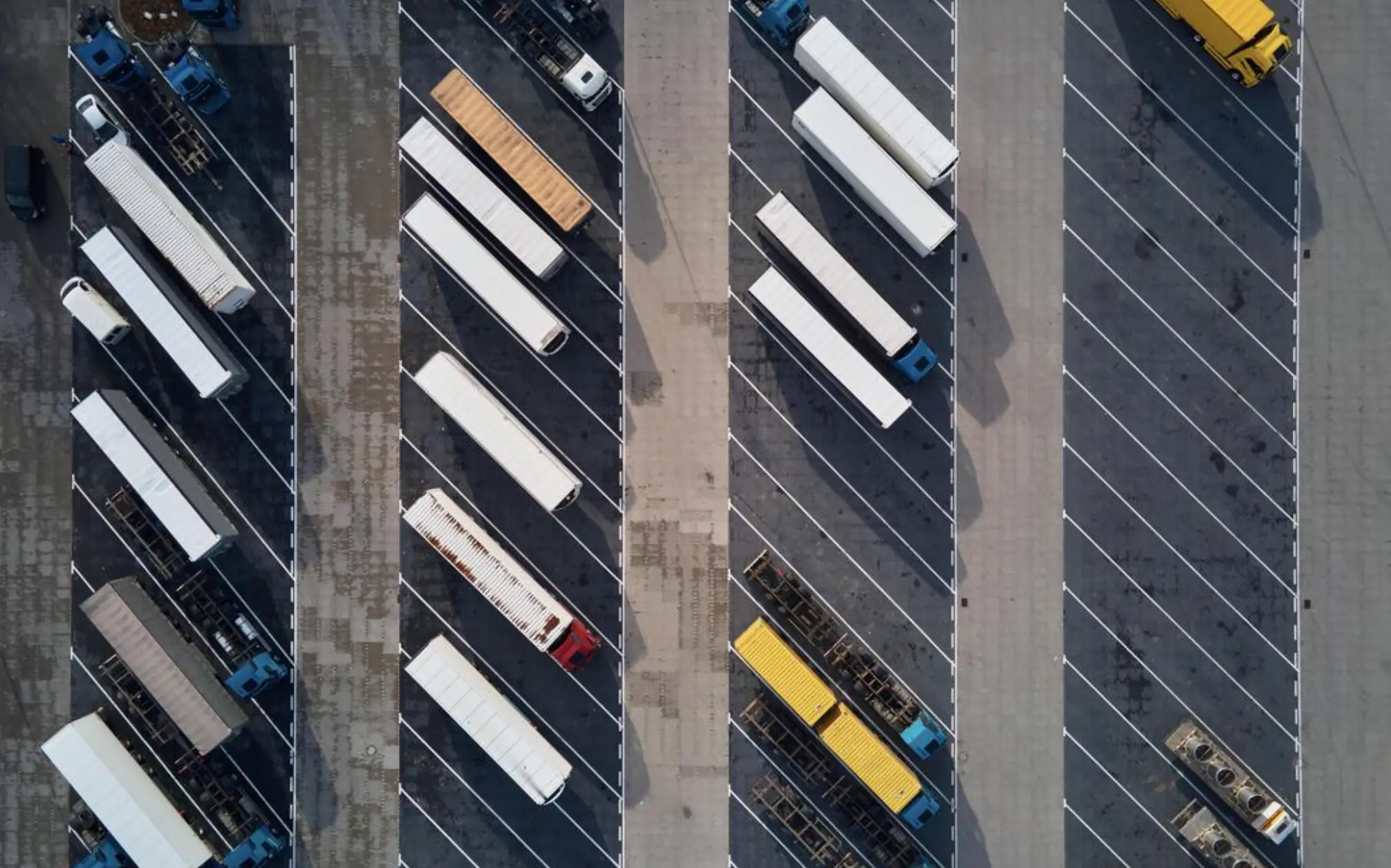
For most North American shippers, 3PLs, manufacturers, and warehouse operators, WMS and TMS have done a solid job digitizing the warehouse and the highway. But the yard, the physical interface between those two systems, is still where plans become guesses. That “yard digitization gap” is why organizations with otherwise modern supply chains still struggle with trailer dwell, gate congestion, detention, missed appointments, and unreliable ETAs.
This matters because the scale is enormous. On any given day, tens of billions of dollars of goods flow through North America’s warehouse and factory footprint. At the same time, the operating environment keeps getting tighter: sustained logistics demand, ongoing square footage growth, and a constrained labor market put pressure on throughput and service levels. The result is predictable: visibility initiatives are no longer just about better dashboards. They are about execution, automation, resilience, and measurable cycle time reduction.
This article lays out what the best end-to-end logistics visibility solutions look like in 2026. These solutions include top supply chain visibility tools for efficient logistics, which are capable of moving the needle in terms of operational efficiency.
What “end-to-end visibility” really means in modern logistics
In practice, end-to-end visibility is not one tool. It is an operating model where events, assets, and work are connected from planning to execution across four domains:
Planning and intent
Order demand, appointment schedules, labor plans, carrier plans, dock plans.
In-transit reality
GPS/telematics, ELD-derived milestones, geofences, traffic and weather impacts, carrier exceptions.
Facility execution
Gate, yard, dock, staging, loading/unloading, QA, paperwork, departures.
Closed-loop learning
A data layer that enables root cause analysis, continuous improvement, and decision intelligence.
Most organizations are “strong in 1 and 2,” decent in dock execution but surprisingly weak at connecting the yard to everything else. This weak link is not academic; it is where costly time hides because the yard is where assets wait and where exceptions compound.
To address this issue effectively requires a shift towards logistics visibility platforms with advanced features that can bridge this gap. Such platforms should ideally leverage AI-powered carrier management solutions to optimize operations across all domains mentioned above.
Furthermore, embracing an end-to-end supply chain visibility approach will not only help in optimizing current processes but also pave the way for future innovations. This comprehensive approach includes integrating a robust reference architecture for terminal projects that connects network visibility to yard execution effectively.
In summary, achieving true end-to-end visibility involves more than just implementing new tools; it requires a holistic transformation in how organizations view their operations and leverage technology to
The market forces raising the bar for visibility
If you’re buying visibility tooling today, you are not just chasing a nicer control tower view. You are responding to structural constraints that show up in daily ops:
Labor constraints are persistent. In the U.S., the Bureau of Labor Statistics continues to track labor force participation, quit rates, and structural tightness in transportation and warehousing-related roles. The practical outcome is that “more people” is not a reliable strategy for “more throughput.” (Source: U.S. Bureau of Labor Statistics, https://www.bls.gov/)
Detention and dwell are no longer tolerable noise. Detention fees are increasingly enforced, and dwell creates cascading costs: yard jockey utilization, dock schedule breakage, and service failures. Industry groups like the Federal Motor Carrier Safety Administration and U.S. DOT have elevated detention and demurrage concerns as systemic issues. (Source: U.S. DOT / FMCSA, https://www.transportation.gov/)
Security and cargo theft risk is elevated. Supply chain theft has been a growing operational concern across North America, pushing facilities to tighten gate controls, asset verification, and exception handling.
Sustainability expectations are operationalizing. Shippers and logistics networks are asked to quantify emissions and reduce waste. Truck idling, re-handling, and congestion are not just inefficiencies. They are measurable emissions contributors, and yard operations are a major lever.
In this context, leveraging emerging technologies in logistics such as AI in logistics can provide significant advantages. These technologies can help streamline operations and improve efficiency.
However, visibility has to graduate from “knowing” to “orchestrating.” This is where a carrier operation management platform comes into play, helping to manage operations more effectively.
Moreover, with the rise of digital platforms for freight matching, businesses can boost efficiency while cutting down on logistics costs.
The yard: where visibility programs go to die (unless you instrument it)
The yard is a unique environment. It is dynamic, multi-actor, and asset-heavy:
Trailers, containers, chassis, tractors, and drop lots
Carriers arriving early or late
Multiple gate flows
Spotters moving assets
Dock schedules changing based on labor and downstream constraints
Security constraints that vary by customer, product, and risk profile
And yet, many yards still run on a blend of radio calls, paper logs, manual check-in, and tribal knowledge.
That creates three core problems:
Data latency: by the time the system reflects reality, reality has changed.
Low trust: teams stop believing the data and revert to ad hoc processes.
Execution gaps: even when you see the problem, you cannot route work fast enough to fix it.
The best visibility solutions treat the yard not as a “map,” but as a controlled execution environment where events are captured automatically and translated into workflows. This is where real-time visibility in logistics tech becomes crucial.
What the best end-to-end logistics visibility solutions include (the real checklist)
If you want to evaluate “best-in-class” without getting distracted by feature lists, focus on whether the solution can do the following in your environment, at your scale.
1) Real-time event capture, not periodic updates
End-to-end visibility is only as good as its timestamps. The most valuable events are the ones humans are least reliable at capturing consistently:
Arrival at gate (and which lane)
Identity verification (tractor, trailer, container, driver)
Check-in completion
Yard location assignment (and whether it was actually reached)
Dock arrival, dock start, dock end
Departure and check-out verification
If these events depend on manual scans and manual yard audits, your “real-time” view will drift.
What “best” looks like is automated, passive capture using infrastructure that can operate outdoors and at gate speed. This aligns with the capabilities of next-gen yard visibility leading platforms for real-time asset control.
Moreover, addressing the top yard problems such as data latency and execution gaps requires leveraging technology that enables dynamic route planning, optimizing logistics with AI and real-time data.
2) A canonical data layer that reconciles TMS, WMS, and yard reality
Most networks already have:
A TMS that knows loads, carriers, appointments, tenders, ETAs
A WMS that knows inventory, waves, labor, dock door processes
What they often lack is a yard data model that can reconcile asset identity, location, and status in a way that upstream and downstream systems can trust. Without that, you get duplicate records, phantom trailers, and “unknown dwell” buckets that kill analysis.
Best-in-class visibility stacks build a data lake or unified operational data layer where:
Asset master data is clean
Events are immutable and time-stamped
Exceptions have reason codes
Work queues are derived from rules, not ad hoc messages
3) Workflow orchestration that converts visibility into throughput
Visibility without execution is a reporting tool.
A true end-to-end solution must create and manage work:
Intelligent location assignment
Prioritized spotter move tasks
Dock-door to yard staging logic
Exception workflows for high-risk or high-value loads
Rules for refrigerated or time-sensitive freight
Automated notifications to carriers and internal teams
This is where a Yard Operating System matters: it is the missing execution layer between TMS planning and WMS dock work.
4) Security and compliance instrumentation built into the flow
Security is no longer an add-on. Modern yards need:
Configurable verification at entry and exit
Blacklists for unauthorized equipment
Audit trails for who approved exceptions
Damage detection and dispute evidence
Policy triggers based on load attributes
When these controls are separate from daily gate and yard workflows, people bypass them under pressure. The best solutions put security into the same engine that routes work.
5) Network scalability: multi-yard visibility with local autonomy
If you operate 5+ sites, you need two things at once:
A single pane of glass for leadership and network operations
Site-level flexibility for layout, rules, and local exceptions
“Best” means you can roll out repeatable capabilities, with configuration not customization, and you can compare performance across sites with consistent definitions.
This is where how a yard management system enhances real-time visibility across multi-site operations becomes crucial.
Why yard execution is now the most practical “end-to-end” investment
A lot of logistics leaders are already investing in AI, robotics, and decision intelligence. The yard is where those strategies become real because:
It is the physical coupling point between transportation variability and warehouse constraints.
It contains large, addressable waste: searching, staging mistakes, congestion, idle time, detention.
It is measurable quickly: gate times, dwell, trailer turn, dock-to-yard cycle times.
It unlocks the value of WMS/TMS by making appointments and dock plans executable.
That is why yard visibility is increasingly viewed as a board-level throughput and customer experience lever, not a niche operational tool.
Terminal Industries’ approach: a Yard Operating System that closes the loop
Terminal Industries focuses on the part of the network where visibility and execution most often break: the yard.
The company's Terminal Yard Operating System™ (YOS) is designed as an end-to-end yard execution platform that bridges the highway-to-warehouse bottleneck. It combines:
AI-native computer vision for automated event capture and asset identity
A modern data foundation to produce trusted yard events and operational truth
SmartYMS™ workflows to automate and orchestrate gate and yard operations
Advanced Yard applications to support compliance, security, and exception handling
Yard Networks to connect multiple yards with a unified operating layer
This approach aligns perfectly with the growing trend towards logistics optimization software that boost supply chain efficiency.
In other words, Terminal is not trying to be another dashboard. It is designed to make the yard “computable,” so the rest of the supply chain can finally run closed-loop.
What that looks like in real workflows
While each site differs, the target workflows are consistent across mid-market and enterprise yard networks:
Planning (Pre-Arrival): align appointments, expected assets, security policies, and staging intent before the truck arrives.
Check-In / Check-Out: automate identification, verification, and logging without slowing gate velocity.
Asset location and movement: maintain a live, trusted record of where assets are and where they should go next, then generate move tasks accordingly.
Exception management: high-risk loads, unauthorized equipment, missing paperwork, and non-compliant events route into governed workflows rather than radio calls.
Terminal’s architecture is designed for operators with 5+ yards across North America, especially where traffic is meaningful: 2+ shifts/day, 25+ dock doors, 50+ parking spots, and the yard is too complex to “just manage with better discipline.”
What to look for when selecting an end-to-end visibility solution (without buying shelfware)
Even experienced teams can get pulled toward “platform narratives.” A more reliable way to buy is to validate fit across five dimensions.
1) Accuracy and trust at the edge
If your yard data is wrong, nothing downstream matters. Ask:
How does the system achieve high asset identity accuracy outdoors?
What is the method for validation and reconciliation?
How are false positives handled operationally?
Terminal’s approach is computer-vision-driven, designed to deliver high data accuracy suitable for gate-speed operations and downstream decision-making. This level of precision can significantly enhance carrier management, optimizing logistics compliance and overall efficiency.
2) Time-to-value and deployment friction
The yard is not where you want a 12-month program that depends on heavy construction or fragile device sprawl. Validate:
Can it deploy without trenching and major infrastructure changes?
What is the IT lift and integration complexity?
Can it scale site-to-site with repeatable playbooks?
Terminal’s Terminal-in-a-Camera™ concept is built around modular deployment with a focus on rapid rollout and low disruption, which is often the difference between pilot success and network adoption.
3) Integration posture: augment, don’t replace
Most operators are not replacing TMS/WMS to fix yard visibility. Ensure:
Bi-directional integration is supported (events in and out)
The yard system can enrich TMS/WMS records with trusted timestamps
Exceptions can be published to the right systems and teams
Terminal is designed to integrate through a flexible layer with common warehouse and transportation systems, plus physical gate controls, kiosks, and access control.
4) Operational control, not just analytics
A yard solution should reduce radio chatter, manual audits, and “where is it?” searches. Ask:
Does it generate work and orchestrate moves?
Does it support configurable rules by asset and load attributes?
Can it automate gate flows under real traffic patterns?
Terminal’s execution layer focuses on turning yard reality into governed, automatable workflows, including rules for staging, verification, and movement.
5) Security and resilience
As cargo theft and fraud risks rise, a modern yard needs built-in controls:
Blacklist engines and exception workflows
Verification steps for high-risk loads
Auditability for investigations and claims
Terminal’s Advanced Yard capabilities are built with these workflows in mind, including proactive detection patterns and configurable security protocols.
For more insights into how an AI-powered yard management system can revolutionize logistics, check out this article on the future of logistics.
A practical “best solution” recommendation: start where the system breaks
If your organization already has mature WMS and TMS coverage, the fastest path to true end-to-end visibility is usually:
Instrument the yard and gate so asset identity, timestamps, and locations are reliable. This can be achieved through yard asset management which helps digitize logistics for improved efficiency.
Connect those events into your operational data layer so TMS and WMS plans can be measured against reality.
Automate the highest-friction workflows (gate processing, location assignment, spotter task orchestration, exception handling). Implementing a yard automation platform can significantly enhance efficiency and safety in these processes.
Scale across the yard network with consistent definitions and site-level configuration.
That sequence is exactly why yard execution platforms are gaining attention. They do not compete with your core systems. They make your core systems more truthful.
Closing: end-to-end visibility is earned at the gate-to-dock bridge
The best end-to-end logistics visibility solutions do three things well: they capture reality automatically, they unify that reality into trusted data, and they operationalize it through workflow orchestration.
For many networks, the yard is the last major place where those three requirements are not met. And because the yard is where time, assets, and risk concentrate, closing that gap tends to produce outsized returns in throughput, detention reduction, and customer experience.
Terminal Industries exists to modernize that bridge from gate to dock. If your visibility story is strong on the road and inside the four walls, but weak in between, a Yard Operating System like Terminal Yard Operating System™ (YOS) is often the missing piece that makes “end-to-end” real. Our yard management software can help elevate logistics efficiency today while our yard automation platforms are designed to increase efficiency and safety in logistics operations.
FAQs (Frequently Asked Questions)
What does 'end-to-end visibility' really mean in modern logistics?
End-to-end visibility in modern logistics is an operating model connecting events, assets, and work from planning to execution across four domains: Planning and intent (order demand, appointment schedules), In-transit reality (GPS tracking, carrier exceptions), Facility execution (gate, yard, dock operations), and Closed-loop learning (data-driven continuous improvement). It goes beyond a single tool to integrate all phases of the supply chain for actionable insights.
Why is the yard considered the weak link in supply chain visibility?
The yard represents a 'digitization gap' between warehouse management systems (WMS) and transportation management systems (TMS). It is where assets wait and exceptions compound, leading to issues like trailer dwell, gate congestion, detention fees, missed appointments, and unreliable ETAs. Despite strong planning and in-transit visibility, many organizations struggle to connect yard operations effectively to overall supply chain visibility.
What market forces are increasing the demand for advanced visibility tools in logistics?
Several structural constraints drive the need for enhanced visibility: persistent labor shortages limiting throughput growth; rising enforcement of detention fees making dwell times costly; increased security risks prompting tighter gate controls; and growing sustainability expectations requiring emissions quantification. These factors compel organizations to adopt comprehensive visibility solutions that improve efficiency and resilience.
How do advanced logistics visibility platforms address the yard digitization gap?
Advanced logistics visibility platforms bridge the yard digitization gap by integrating real-time data from gate, yard, dock, staging, loading/unloading processes with planning and in-transit information. They leverage AI-powered carrier management solutions to optimize operations across all domains, enabling automation, measurable cycle time reduction, exception handling, and seamless coordination between warehouse and transportation activities.
What role does closed-loop learning play in end-to-end supply chain visibility?
Closed-loop learning provides a data layer that enables root cause analysis, continuous improvement, and decision intelligence within supply chain operations. By capturing performance metrics across planning, transit, facility execution, and yard activities, organizations can identify inefficiencies, adapt strategies proactively, and enhance overall operational resilience through informed decision-making.
Why is sustainability becoming a critical factor in logistics visibility initiatives?
Sustainability demands are operationalizing as shippers must quantify emissions and reduce waste. Inefficiencies like truck idling, re-handling cargo, and congestion contribute significantly to emissions. Since yard operations are a major lever affecting these factors, enhanced visibility helps monitor and optimize these processes to reduce environmental impact while improving operational efficiency.


