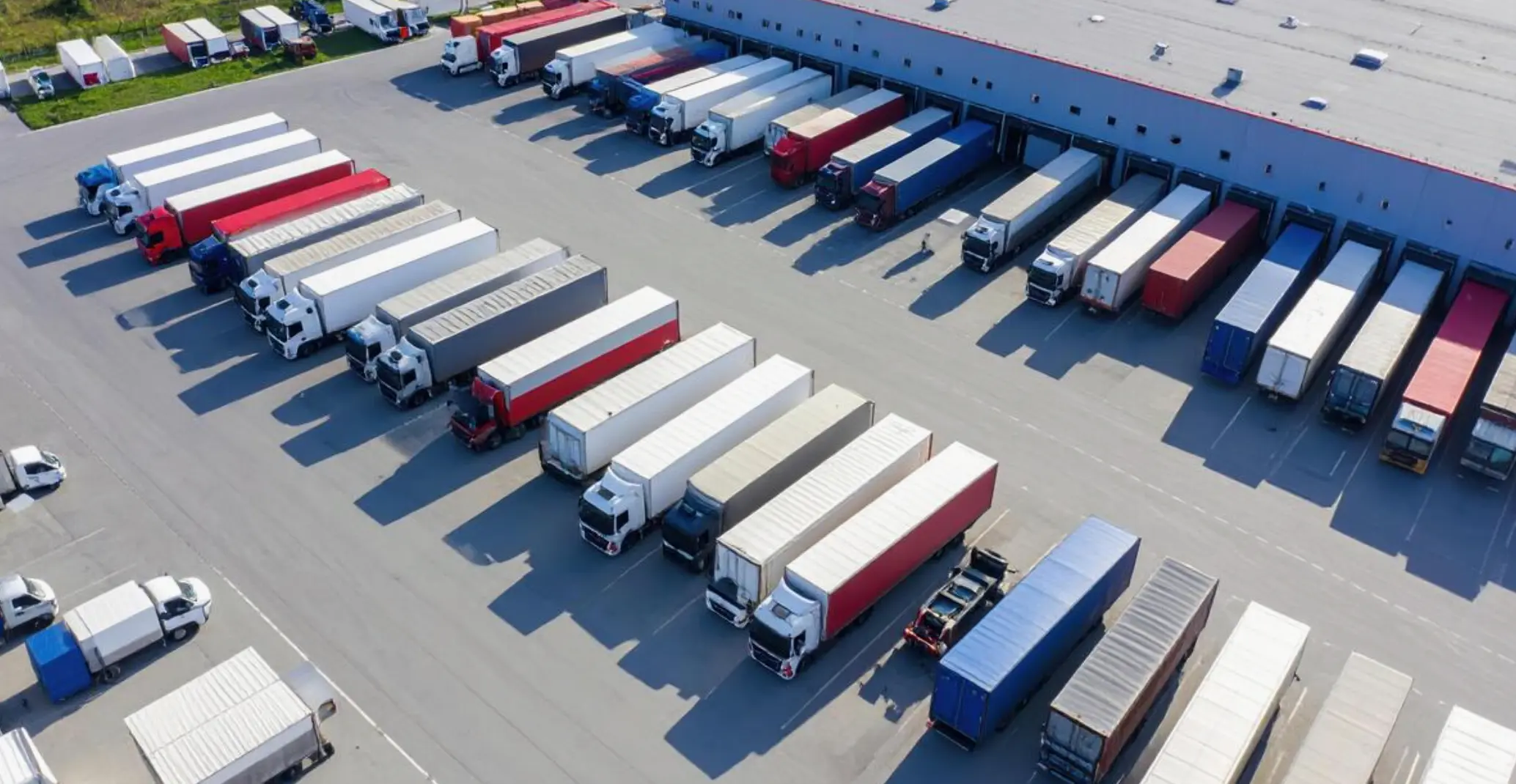

Warehouse execution and transportation management have come a long way. Most operators have a WMS to orchestrate inventory and labor inside the four walls, and a TMS to plan, tender, and track on the road. But there’s still a stubborn gap in between: the trailer yard.
For many networks, the yard is where visibility drops, decision-making becomes radio-driven, and “system of record” gets replaced by whiteboards, tribal knowledge, and a couple of spreadsheets that never agree. This matters because the yard is not a side quest. It is the control plane that determines whether dock doors stay fed, whether drivers churn, whether detention bills spike, and whether service levels hold when volume surges or labor gets tight.
With over 50,000 warehouses and factories in North America and a sustained push toward higher throughput and automation, the yard cannot remain a data and process black hole. Yard digitization is quickly becoming the practical prerequisite for scaling distribution operations without scaling headcount.
This guide breaks down what modern trailer yard management actually entails, where the hidden constraints live, and what “good” looks like when you’re ready to close the gap between gate and dock.
What trailer yard management really means (beyond “where’s my trailer?”)
Trailer yard management is the set of operational controls that governs how trailers, containers, and related assets move through a facility perimeter and staging areas to support dock execution. In practice, it spans four tightly coupled domains:
Planning (pre-arrival)
Appointment scheduling, expected arrival sequencing, load attributes, temperature requirements, hazard classes, high-value rules, and carrier/driver metadata. This is where you decide what should happen.
Gate execution (check-in and check-out)
Identity verification, trailer and tractor capture, seal validation, document exchange, exception handling, and access control. This is where you confirm what is happening.
Yard orchestration (moves and staging)
Assigning parking locations and dock doors, dispatching hostlers/spotters, prioritizing move tasks, preventing deadhead moves, and managing dwell. This is where you control what happens next.
Visibility, compliance, and analytics
A time-stamped chain of custody for assets and events: arrivals ingate/outgate door assignments movements dwell thresholds detention triggers damage flags security exceptions. This is where you learn & improve.
Most yards “do” all four today. The issue is that they do it with fragmented instrumentation leading to high variability low confidence slow exception resolution.
To tackle these challenges effectively it's essential to implement advanced yard management systems which streamline operations significantly. Such systems enhance visibility across all yard activities thus improving decision making processes which are often radio-driven currently.
Moreover adopting strategies such as drop trailer programs can raise logistics efficiency & flexibility while also reducing unnecessary costs associated with traditional check-in processes as highlighted in our comparison between yard management system vs traditional check-in process.
Why the yard is still a digitization gap
There are structural reasons the yard has lagged behind WMS and TMS digitization:
The yard is semi-structured. It looks like a parking lot, not a conveyor. Moves are not always deterministic, and priorities change with dock constraints.
It’s multi-actor. Security, yard ops, carriers, hostlers, and shipping/receiving all touch the same assets with different incentives.
The instrumentation has historically been weak. RFID programs stall, manual yard checks don’t scale, and “check-in” kiosks often stop at capturing a trailer number without grounding it to real-time location and movement events.
It is operationally critical but rarely owned end-to-end. Many organizations split accountability across transportation, warehousing, and security.
Meanwhile, macro pressures are pushing the opposite direction. The industry is seeing sustained logistics demand and warehouse square footage growth, while the working-age labor pool is not expanding at the same pace. That is exactly the scenario where automation and decision intelligence become less “nice to have” and more “required to keep service stable.” Logistics management automation will play a crucial role in this transition.
The metrics that actually define good yard management
If your yard KPIs are limited to “detention cost” and “turn time,” you’re missing the levers. High-performing yards manage toward a small set of measurable outcomes that link directly to service and cost:
1. Trailer dwell time by segment
Not just total dwell, but dwell by status: awaiting door, at door, loaded, empty, awaiting pickup, and exception holds (QA, temperature excursions, paperwork, security).
In order to achieve such high performance in yard management, Yard Management Software can be a game changer. This software can transform the way yards are managed by providing real-time data and insights.
However, there's still a significant digitization gap in many yards. This gap needs to be addressed for successful adoption of AI-native solutions in yard management.
One potential solution for bridging this gap is the implementation of Yard Management Software. This software can streamline operations and provide valuable data insights that can lead to better decision making.
2. Door utilization and starvation
Door utilization is only meaningful when paired with starvation time. If doors are available but not fed, the yard is failing the warehouse.
3. Hostler productivity and empty moves
Moves per hour is incomplete. You want to reduce unproductive moves, such as re-handling and deadhead repositioning caused by poor staging rules.
4. Check-in/check-out cycle time and exception rate
This is a direct measure of gate friction. It also correlates with driver satisfaction, congestion risk, and security posture.
5. Inventory accuracy for “yard inventory”
You already demand cycle-count-level accuracy inside the warehouse. The yard needs the same standard if you expect the WMS and TMS to deliver on their promise.
A practical benchmark many teams aim for is not “perfect visibility,” but trusted visibility: data accuracy high enough that dispatch decisions and compliance records can be made from the system without a manual yard hunt.
To achieve such trusted visibility, implementing a dynamic yard management system can significantly optimize supply chain visibility.
Where yards lose throughput: the hidden constraints
Yard congestion is usually a symptom. The underlying constraints tend to cluster in a few areas.
Misaligned planning between TMS appointments and dock reality
Appointments are often scheduled without enough context: door type constraints, labor shifts, temperature-controlled door availability, or whether a load needs a specific area for inspection. When the plan ignores constraints, the yard becomes the buffer, and buffers turn into dwell.
Gate processes that do not create a reliable chain of custody
If check-in does not reliably capture who arrived, with what equipment, under which load attributes, and at what timestamp, then downstream decisions degrade immediately. Errors here create cascading problems: wrong trailers staged, missed priorities, and disputes about detention.
Spotter dispatch that is reactive rather than orchestrated
Most yards dispatch moves via radio calls and personal heuristics. That can work at low volume, but as how a modern yard management system reduces bottlenecks in high-volume distribution centers suggests, at higher volume it produces avoidable re-handling and prioritization drift, especially across shift changes.
Asset search as a standard operating condition
If it routinely takes 15 to 30 minutes to locate the right trailer, that is not “normal yard life.” It is uninstrumented inventory. Multiply that by doors, shifts, and sites, and you have a material throughput tax. This scenario highlights the need for yard asset management to digitize logistics for efficiency.
Security and compliance handled as manual exceptions
High-value loads, seal verification, and unauthorized equipment detection are often handled through ad hoc checks. That increases risk while also slowing operations because the facility cannot automate what it cannot verify.
What modern trailer yard management systems look like (and what to insist on)
A modern approach is less about “a yard management screen” and more about yard execution: software plus instrumentation that can sense the yard and orchestrate it in real time. If you are evaluating modernization, here are capabilities that matter in practice.
Real-time asset identity and event capture (not just data entry)
The system needs to reliably capture trailer identity, tractor identity, timestamps, and key attributes at the gate and ideally through the yard. If you cannot trust identity and time, analytics and automation are fiction. This is where computer vision has become materially relevant. Vision-based capture reduces dependency on manual inputs and can scale without forcing drivers and guards into brittle workflows.
In such a context, comparing cloud-based vs on-premise yard management software solutions becomes crucial. Moreover, utilizing yard management software to improve dock scheduling and asset utilization can further streamline operations.
Configurable workflow orchestration
Every yard has special cases: refrigerated staging, hazmat segregation, “must-ship” retail windows, export holds, QA sampling, and high-value protocols. You need a rules engine that can govern:
parking and staging preferences by load/trailer attributes
verification steps that trigger based on risk or customer requirements
exception holds and release logic
move task prioritization and sequencing
Integrated gate automation with security posture
Gate automation is not only about speed. It is about consistent enforcement: access control, blacklist/allowlist logic, and escalation flows that work in guarded, remote-assisted, or fully automated models.
Given the rise in cargo theft concerns across North America, security workflows need to be designed into yard execution, not bolted on as a separate checklist.
Network-wide scalability and visibility
If you run five or more sites, you already know the pain of local optimization. Trailer yards become even harder when assets and carriers circulate across a network. A single-pane-of-glass view, consistent KPIs, and repeatable deployment matter more than another site-specific tool.
Fast time-to-value with low IT lift
The yard is operationally sensitive. You cannot afford a 12-month implementation that requires trenching, bespoke hardware, or a long tail of third-party device management. The best deployments minimize facility disruption while still producing enterprise-grade performance and auditability.
A practical operating model: from “manage the yard” to “execute the yard”
It helps to think in levels of maturity:
Level 1: Manual visibility
Whiteboards, periodic yard checks, radio dispatch, and after-the-fact KPI reporting. Works until volume, security requirements, or labor constraints increase.
To transition from this level to a more efficient model, consider leveraging yard management automation. This approach can significantly enhance supply chain efficiency by streamlining operations and providing real-time visibility into yard activities.
Level 2: System of record
Basic YMS functions: trailer inventory lists, manual check-in, manual location updates, basic appointment linking. Better reporting, but still high error rates because the yard is not instrumented.
Level 3: Instrumented yard execution
Automated capture at gate, real-time location and movement events, rule-based orchestration, and operational workflows that do not depend on perfect human data entry. This phase signifies a shift from manual to autonomous operations in the yard management system.
Level 4: Decision intelligence and automation
Predictive staging, optimized move queues, automated exception detection, and continuous improvement loops across a yard network. This is where AI becomes operational, not aspirational. The future of logistics lies in leveraging AI for such advanced functionalities.
Terminal’s Yard Operating System™ (YOS) is designed for Levels 3 and 4. It is an end-to-end yard execution platform built to bridge the operational bottleneck between highway and warehouse by combining a modern software platform with AI-native sensing. That includes proprietary computer vision, a real-time data layer, SmartYard™ YMS workflows, and advanced yard applications that support security, compliance, and orchestration across a network of yards.
What to automate first: high-ROI workflows in the yard
If your goal is rapid, repeatable ROI, the sequencing matters. The highest leverage typically comes from instrumenting the moments where errors and delays compound.
1. Pre-arrival planning tied to real yard constraints
Improve appointment fidelity by enriching inbound loads with attributes that affect staging, door assignment, and verification rules. This reduces day-of firefighting. Implementing an AI-powered yard management system can significantly enhance this process.
2. Gate check-in/check-out with automated verification
Digitize identity capture and timestamps. Add configurable verification for high-value or high-risk loads, including seal and equipment validation triggers. Utilizing AI and YMS solutions can streamline this workflow considerably.
3. Automated location awareness and faster asset discovery
Reducing “asset search time” is one of the quickest wins because it directly returns labor capacity and reduces door starvation. Terminal’s approach is built around high-accuracy data capture so teams can stop treating yard hunts as normal work.
4. Move task orchestration for spotters/hostlers
Replace reactive radio dispatch with a structured task queue that prioritizes by operational impact: doors at risk of starving, live loads nearing appointment windows, and exceptions requiring action.
5. Yard network visibility for multi-site operators
Standardize event definitions and KPI calculations across sites so you can manage performance like a network, not a collection of anecdotes. This is where a yard management system comes into play, providing the necessary tools to achieve this level of standardization.
Terminal is built for this reality: mid-market and large enterprise operators running multi-yard networks with meaningful traffic, multiple shifts, and enough doors and parking capacity that orchestration, not effort, becomes the constraint.
Technical fit: what experienced teams validate early
Operators who have been through automation programs know to qualify the site before making promises. For yard execution platforms that rely on real-time sensing and integration, the typical technical fit checklist includes:
Lighting and camera sightlines at gates and key lanes
Power and mounting options for rapid hardware deployment
Network connectivity and latency adequate for real-time event capture
Integration readiness with WMS/TMS, gate arms, kiosks, and access control systems
Operational readiness: who owns exceptions, how workflows change across shifts, and how KPIs will be governed
Terminal’s deployment approach is designed to reduce IT lift and facility disruption. Its Terminal-in-a-Camera™ hardware kit is modular and intended for rapid installation without trenching, while the software layer integrates through a flexible integration model to connect yard execution to the systems that already run your network.
The takeaway: the yard is the new control point for throughput
If you operate five or more high-traffic yards, the question is no longer whether the yard matters. It is whether you can scale your network when the yard is still managed like an offline parking lot.
Trailer yard management has evolved from “tracking trailers” to executing the yard: instrumenting the gate, orchestrating movements, enforcing security and compliance consistently, and creating trusted data that finally lets WMS and TMS investments reach their full value. With AI-native solutions, this transformation is more achievable than ever.
Terminal exists to close that gap. Terminal Yard Operating System™ (YOS) is built as the yard execution platform for a smarter yard, combining AI-native sensing, real-time data infrastructure, and configurable workflows to drive automated throughput, resilient operations, and rapid, repeatable ROI across a yard network. This automation is crucial in elevating logistics efficiency.
If your docks are occasionally idle while trailers sit parked - a situation that could be mitigated by implementing a yard management system - if detention feels uncontrollable, or if “go find it” is still a common workflow, the yard is telling you something. It is ready to be upgraded.
Moreover, adopting such systems can also contribute towards sustainability by reducing idle time and emissions. However, it's essential to be aware of the hidden costs associated with outdated yard management software and take necessary steps to avoid them.
FAQs (Frequently Asked Questions)
What is trailer yard management and why is it critical in logistics operations?
Trailer yard management refers to the operational controls that govern how trailers, containers, and related assets move through a facility's perimeter and staging areas to support dock execution. It is critical because the yard acts as the control plane that determines dock door availability, driver retention, detention costs, and service levels especially during volume surges or labor shortages. Without effective yard management, visibility drops and decision-making becomes inefficient.
What are the four key domains of modern trailer yard management?
Modern trailer yard management spans four tightly coupled domains: 1) Planning (pre-arrival) involving appointment scheduling and load attributes; 2) Gate execution covering check-in/check-out processes like identity verification and document exchange; 3) Yard orchestration which includes assigning parking locations, dispatching hostlers, and prioritizing moves; and 4) Visibility, compliance, and analytics providing time-stamped asset tracking and exception monitoring.
Why has the trailer yard remained a digitization gap compared to WMS and TMS systems?
The trailer yard remains a digitization gap due to its semi-structured environment resembling a parking lot rather than a conveyor, involvement of multiple actors with differing incentives (security, carriers, yard ops), historically weak instrumentation like stalled RFID programs, and fragmented accountability across transportation, warehousing, and security departments. These factors have hindered seamless digital integration.
How does yard digitization improve logistics efficiency and scalability?
Yard digitization enhances logistics efficiency by providing real-time visibility across all yard activities which improves decision-making processes traditionally reliant on radios or manual methods. It enables automation of tasks such as appointment scheduling, gate check-ins, move prioritization, and compliance tracking. This reduces errors, minimizes detention costs, optimizes labor utilization, and supports scaling distribution operations without proportionally increasing headcount.
What metrics should high-performing yards track beyond just detention cost and turn time?
High-performing yards track detailed trailer dwell time segmented by status such as awaiting door assignment, at door loading/unloading phases, empty status, awaiting pickup, and exception holds including quality assurance or temperature excursions. These granular KPIs link directly to service levels and cost optimization by identifying bottlenecks and enabling targeted improvements in yard operations.
What technologies or strategies can help close the gap between gate check-in and dock execution in trailer yards?
Implementing advanced Yard Management Systems (YMS) equipped with AI-powered analytics can streamline gate check-in processes by verifying identities, validating seals, handling exceptions efficiently while orchestrating trailer moves dynamically. Additionally, strategies like drop trailer programs increase flexibility by reducing traditional check-in burdens. Together these technologies facilitate end-to-end visibility from gate arrival to dock departure improving throughput and reducing operational variability.


