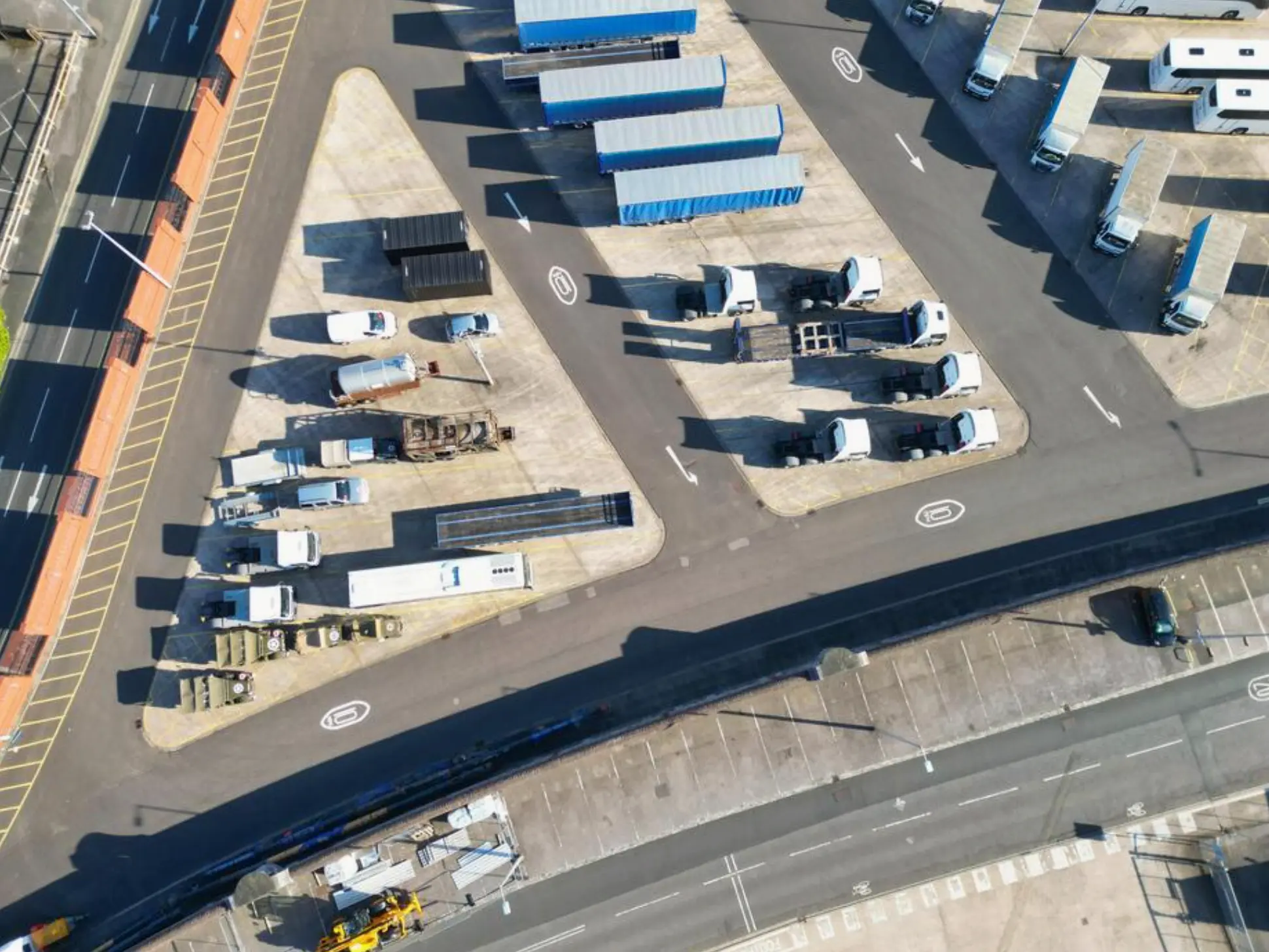

For decades, the yard has been managed as a black box—a necessary cost center where "efficiency" was measured in minutes, not margins. However, in an era of tightening capital and volatile labor markets, Terminal Industries is redefining the yard as a strategic financial lever.
The Concept of "Yard Drag" Traditional logistics models suffer from "Yard Drag"—the cumulative financial leakage caused by manual gate processes, trailer misplacements, and inefficient spotter orchestration. When a facility experiences an 80% reduction in gate time via Terminal’s AI, the impact isn't just a faster truck; it is the systematic elimination of detention and demurrage fees that plague the transportation P&L.
Strategic P&L Levers:
Asset Velocity & Capital Avoidance: By increasing yard throughput by over 50%, Terminal allows enterprises to handle higher volumes without expanding physical footprints or leasing additional overflow lots. This turns "Yard Orchestration" into a Capex avoidance strategy.
Inventory Carrying Costs: Real-time visibility into "inventory at rest" (trailers) allows for leaner safety stocks. If the yard is no longer a "black hole," the working capital tied up in stalled trailers is unlocked.
Labor Resilience: AI-native tasking reduces "search time" and manual radio chatter, allowing existing teams to handle 2x the volume, insulating the P&L against rising labor costs.
Terminal Industries transforms yard operations into a CFO-level narrative by mitigating structural "yard drag," resulting in measurable gains in network-wide financial performance and capital efficiency.


