
AI Supply Chain Software That Fixes Misses
Supply chains did not become complex overnight. They became complex one “good enough” workaround at a time.
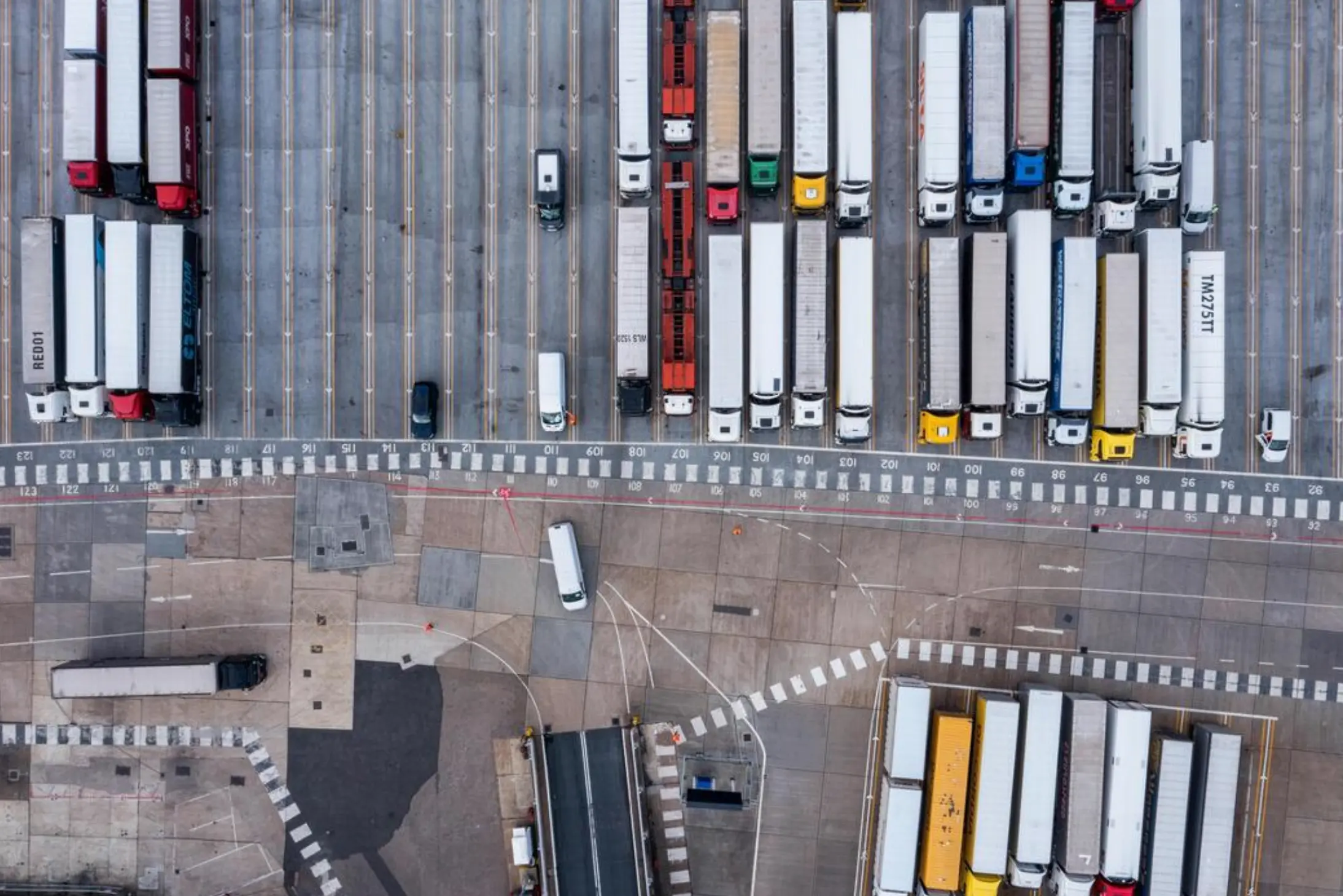
Most operators have already digitized the warehouse and the highway. WMS brought discipline to inventory and labor. TMS brought structure to routing and carrier performance. Yet between those two systems sits the yard, where trailers wait, dwell accumulates, and reality diverges from the plan.
That is the yard digitization gap. It is also where a huge portion of service failures are born.
North America moves more than $50B in goods every day through 50,000+ warehouses and factories. At the same time, logistics square footage continues to grow (roughly 10% annually in many segments), while the working-age labor pool is not growing at the same pace. Leaders are being asked to deliver a better customer experience with fewer people, less slack, and more volatility.
In that environment, “misses” become expensive:
A live load that arrived, but “can’t be found”
A driver checked in, but the dock was not ready
A trailer staged for outbound, but the paperwork does not match
A gate log that says one thing, while the yard tells another story
A detention bill you can’t challenge because you can’t prove what happened
AI supply chain software should fix these misses, not just report them after the fact. And that starts at the yard.
This page explains what AI-enabled supply chain execution looks like in the yard, why traditional approaches fall short, and how Terminal Yard Operating System™ (YOS) closes the loop from gate to dock with practical automation and measurable impact.
To truly understand how to improve efficiency and customer satisfaction in this complex landscape, it's crucial to consider some top supply chain KPIs that can guide decision-making. Additionally, leveraging a yard ROI calculator can help estimate potential savings from implementing AI-powered yard automation solutions.
The yard is where “digital supply chain” becomes physical
Every supply chain strategy eventually runs into a constraint. In many networks, that constraint is not the warehouse management system or transportation planning. It is the handoff.
The yard is the operational bridge between:
Carriers arriving and leaving (highway reality)
Yard capacity and safety constraints (site reality)
Dock schedules and labor plans (warehouse reality)
Customer promises and chargebacks (commercial reality)
When that bridge is managed with partial data, manual scans, and radio calls, the result is predictable: delay, rework, and preventable cost.
The challenge is not that yards lack effort. They lack ground truth.
Even strong teams struggle with:
Visibility that depends on people “remembering to update the system”
Trailer moves that are coordinated verbally, not orchestrated digitally
Fragmented tools: a gate log here, a spreadsheet there, a YMS that covers a slice of the workflow, and a WMS/TMS that assumes the yard behaves like a clean API
That is why the yard often becomes a data and technology black hole. It is also why yard execution is the highest-leverage place to apply AI in supply chain operations.
What “AI supply chain software” should mean in 2026
AI in supply chain has matured beyond dashboards and generic predictions. The most valuable systems now do three things well:
Perceive reality in real time (what is happening now)
Decide and orchestrate within constraints (what should happen next)
Prove outcomes with auditable data (what happened, and why)
In the yard, that translates into:
Knowing what assets are on property, where they are, and what they are carrying
Automating check-in and check-out workflows so they are consistent and defensible
Directing yard moves intelligently so dwell shrinks and throughput rises
Enforcing security and compliance rules without slowing down operations
Producing high-integrity timestamps that reduce disputes and detention exposure
The best AI does not replace your operators. It gives them superpowers: speed, precision, and confidence under pressure.
If you are skeptical, that is healthy. The supply chain has seen plenty of “AI” that is just a new interface on old data problems. In yards, bad data is not a nuisance; it is operational gravity. If the system cannot see, it cannot help.
Which brings us to the most important principle.
Incorporating general supply chain automation as an AI pillar can significantly enhance overall efficiency. Moreover, leveraging generative AI in supply chain can further optimize processes by improving visibility across various stages of the supply chain.
Furthermore, utilizing dynamic route planning can revolutionize logistics by providing real-time data for better decision-making. It's essential to stay informed about current AI in logistics and supply chain trends
AI can’t optimize what it can’t observe
Most yard misses come down to one root cause: the system does not know what is true.
A trailer “arrived” in the appointment system, but not at the gate
A spotter moved an asset, but the location was never updated
A drop trailer was re-spotted, but the yard map still shows the old row
A carrier disputes detention, and the only evidence is a manual log
In the warehouse, the barcode scan is the unit of truth. In transportation, the ELD and GPS trail create accountability.
In the yard, truth is often informal.
That is why Terminal starts with a different foundation: AI-native yard execution built on computer vision and a real-time data infrastructure, not on manual updates. This approach ensures end-to-end supply chain visibility which is essential for optimizing operations.
Terminal’s proprietary vision capabilities are designed to deliver 99.5% data accuracy, because execution systems only work when the data is trustworthy enough to automate. This level of accuracy is a significant improvement over legacy yard management systems, which often struggle with data reliability.
Introducing Terminal Yard Operating System™ (YOS): the modern bridge from gate to dock
Terminal Yard Operating System™ (YOS) is an end-to-end yard execution platform built for mid-market and large enterprise operators across North America. It is designed for networks with five or more yards that need cost reduction and throughput gains without a multi-year transformation program.
Terminal is not trying to make the yard “a little better.” It is reinventing what yard execution can be: a system that feels simple on the surface, but delivers enterprise-grade performance underneath.
At a high level, Terminal YOS combines:
AI vision technology (to capture ground truth)
A data lake and real-time data infrastructure (to make the yard auditable and actionable)
SmartYard™ YMS workflows (to digitize gate and yard execution)
Advanced Yard solutions (security, compliance, damage detection, ISR and high-risk workflows)
Yard Networks (to scale visibility and control across multiple sites)
This comprehensive approach allows us to implement autonomous workflows that think, act and optimize, significantly improving operational efficiency.
The goal is straightforward and ambitious: maximum automated throughput, repeatable at scale, with rapid ROI.
Terminal deployments are designed to achieve rapid, repeatable ROI in under five months, with low IT lift and minimal disruption. Our transportation management system further enhances supply chain efficiency by optimizing various aspects of transportation management.
The yard workflows where AI makes an immediate difference
AI is not just a feature; it is a capability that should be seamlessly integrated into the workflows your team runs every shift. This is particularly evident in the yard workflows where AI supply chain execution can make a significant impact.
1) Planning (pre-arrival): turning appointments into readiness
Pre-arrival planning is a critical phase where “schedule adherence” either becomes a reality or remains a mere wish. AI-enabled yard planning should assist you in:
Matching inbound arrival patterns to dock capacity and labor reality
Flagging high-risk loads that require extra verification
Preparing staging rules so high-priority outbound freight is not buried
Reducing surprises by connecting inbound events to yard and dock readiness
With yard digitization readiness as part of your strategy, terminal supports configurable workflows and attributes so the system can treat different loads differently. Not every trailer deserves the same path through the yard. AI helps apply the right rules automatically.
2) Check-in and check-out: making timestamps defensible
Gate processes mark the start and end of the logistical story. When these processes are manual, they tend to become inconsistent, slow, and hard to audit. However, with Terminal’s SmartYard™ workflows, automated gate processes can be implemented to reduce friction while increasing control:
Real-time identity and asset verification
Automated event capture that improves data integrity
Configurable verification workflows for high-value or high-risk loads
Integration with existing access control systems, kiosks, and gate arms
This is where agentic AI transforms operational control, making the yard language matter significantly. Terminal has reinvented this "yard language" playfully yet insightfully because naming a process clearly is often the first step to fixing it. When teams share a common understanding of what “checked in” truly means, execution becomes easier to standardize and scale.
Furthermore, by implementing autonomous yard workflows with agentic AI, as described in our blog on building autonomous yard workflows with agentic AI, you can ensure that your yard management system not only boosts efficiency but also integrates seamlessly with your overall operational strategy.
3) Yard execution: orchestrating moves instead of chasing them
The yard is not just a parking lot. It is a dynamic queueing system with constraints:
Limited dock doors
Limited spotters
Limited yard space
Uncertain arrivals
Safety and security requirements
Competing priorities between inbound, outbound, and repositioning
When execution is managed by radio calls and tribal knowledge, it works until it does not. When it breaks, it breaks loudly: congestion, dwell, missed cutoffs, and firefighting.
Terminal’s Asset Movement capabilities are designed to orchestrate yard move tasks, including location assignment logic and parking preferences based on asset and load attributes. A flexible rules engine governs staging and location preferences so the yard can run with intention, not habit.
4) Search time: the silent throughput killer
Ask any yard team where time disappears and you will hear a familiar answer: “We’re looking for it.”
Terminal’s AI and computer vision are built to reduce asset search time by up to 90%, because the system maintains real-time awareness of what is on property and where it is.
That improvement compounds:
Spotters complete more value-added moves
Docks stay fed with the right trailers at the right time
Supervisors stop triangulating reality across radios, spreadsheets, and guesswork
5) Security and compliance: preventing loss without adding friction
Cargo theft and unauthorized equipment movement are not abstract risks. They are operational threats that scale with volume and complexity.
Terminal’s Security application supports proactive detection of stolen or unauthorized equipment through a configurable blacklist engine. Workflows can be tailored to enforce protocols at check-out, including enhanced verification for high-value and high-risk loads.
The right approach to security is not more manual steps. It is smarter steps, applied only when risk signals demand them.
6) Detention and disputes: replacing arguments with evidence
Detention is not only a cost problem. It is a trust problem. Disputes drag on because the data trail is incomplete.
Terminal’s approach creates a high-integrity event record that helps reduce exposure and improve accountability. Operators have seen outcomes like a 12% reduction in driver detention fees, driven by stronger visibility, better orchestration, and clearer proof of what happened.
Why the yard has resisted digitization for so long
If the yard is so important, why has it lagged behind warehouses and transportation?
Because yards are messy in ways software historically struggled to capture:
Assets move without a scan
Locations are physical and changeable
Processes vary by site, shift, and season
Visibility depends on line-of-sight, lighting, and human behavior
Traditional systems require too much manual updating to stay accurate
This is why many organizations have a WMS and a TMS that are technically “integrated,” yet still operate with a blind spot in between.
Terminal was built specifically to eliminate that blind spot, using AI vision as the system of record for yard reality and pairing it with software that is configurable enough for real operations. To understand more about how this technology works, you can read about Terminal's agentic AI.
What to look for in AI yard execution software (a practical checklist)
If you are evaluating AI supply chain software for yards, these are the questions that matter.
Does it produce ground-truth accuracy at scale?
AI that relies on manual inputs will drift. You need real-time, automated capture that stays accurate on busy days, not just in demos.
Terminal’s vision stack is designed for 99.5% accuracy, because execution depends on it. This level of precision is crucial when considering yard management software options that can elevate logistics efficiency.
Can it automate, not just visualize?
Visibility is table stakes. Automation is leverage.
Terminal focuses on automated gate workflows, orchestration, and rules-driven execution that can raise throughput by 50%+ in the right environments.
Does it integrate cleanly with your WMS/TMS and access control?
A yard system should unlock your WMS and TMS, not become another silo. Terminal integrates through a flexible integration layer with third-party WMS/TMS tools, including carrier management solutions, as well as gate arms, kiosks, and access control systems, enabling real-time visibility and event flow.
Is it fast to deploy and easy to expand?
If deployment requires trenching, heavy third-party devices, or months of IT bandwidth, it will struggle to scale across a network.
Terminal offers Terminal-in-a-Camera™, a modular hardware kit leveraging AI-powered computer vision. It is designed to be plug-and-play, deployed in hours without trenching, with low IT lift and straightforward expansion to other yards.
Does it support real operational variability?
Yards are not identical. A refrigerated facility has different priorities than CPG or manufacturing. A contract carrier yard may have different verification needs than retail grocery.
Terminal is configurable, with a rules engine and workflow controls that authorized users can update as operations evolve.
Can it scale to a “network view” without losing local control?
Corporate teams need a single pane of glass. Site teams need fast, practical execution tools.
Terminal’s Yard Networks provide unified visibility across multiple yards, strengthening management oversight while keeping execution grounded at the site level.
Who this is built for: the operators who feel the pressure first
Terminal’s Ideal Customer Profile includes North American companies with:
5+ yards
Mid to high traffic flow
2+ shifts per day
25+ dock doors
50+ parking spots
Industries such as 3PL, Retail/Grocery, CPG, Refrigerated Warehousing, Manufacturing, and Contract Carriers
The buyer and champion roles are practical, not theoretical. Terminal is built for the people who live with the yard every day:
Shipping, receiving, yard, and transportation supervisors and managers
Security managers
Spotter managers
VP of warehousing, automation engineers, site leadership
Corporate leaders in transportation, continuous improvement, supply chain, digital transformation, and operations
The shared interests are consistent across titles:
Speed and productivity without chaos
Less disruption, more predictability
Integration with existing systems
Clear ROI
A path to automation that does not require ripping and replacing core platforms
The measurable promise: capacity, resilience, and sustainability
It is tempting to talk about yards only in terms of efficiency. But the stakes are higher.
A smarter yard creates:
More capacity without adding acreage
Throughput gains are often the fastest, cleanest “expansion” available.
More resilience under volatility
When demand spikes or labor tightens, you need execution that adapts in real time.
More sustainability through less idle time and wasted movement
When assets spend less time waiting and being re-handled, emissions and fuel waste drop with them.
Terminal’s mission is to reinvent yard logistics so goods can flow efficiently, visibly, sustainably, and resiliently. That is an ambitious goal, and it should be. This industry does not need incremental improvement. It needs a modern logistics bridge from gate to dock.
By leveraging advanced technologies such as AI route optimization, we can significantly boost logistics efficiency and savings.
Why Terminal feels different: real-world magic, measurable impact
A yard is one of the most physical environments in the supply chain. Cameras, gates, trailers, weather, shifts, peak seasons. The work is real.
Terminal’s brand speaks about “magic” not as a metaphor for hype, but as the moment when something that used to require constant human effort becomes smooth, automated, and reliable.
That is what great execution technology should feel like:
Simple for operators
Confident for leaders
Auditable for the business
Scalable across the network
Terminal is built on core values that match what yard transformation demands:
Extreme Ownership: execution matters, and details matter.
Smart Execution: practical wins, deployed quickly, repeated reliably.
Passionate Innovation: not novelty, but breakthrough utility.
A grounded view of technical fit (because reality matters)
Not every site is identical, and any responsible AI deployment should acknowledge the basics.
Terminal deployments consider requirements such as:
Proper site lighting
Power availability
Connectivity and latency
Integration points with existing WMS/TMS and access control infrastructure
There are also operational considerations, such as bi-directional gate flows for varied traffic patterns. The point is not to add complexity. The point is to make sure the system can deliver the reliability and accuracy that automation demands.
The future yard is not fully autonomous overnight. It is intelligently automated now.
The most effective supply chain organizations are not waiting for a perfect future state. They are building toward it with systems that create immediate value and compound over time.
AI in the yard is one of the rare opportunities where:
The problem is clear
The waste is measurable
The operational wins show up fast
The data foundation improves every other system upstream and downstream
Terminal Yard Operating System™ is built to be that foundation: the only yard execution platform for a smarter yard, designed to bridge the operational and data gaps that have held yard logistics back for decades.
If your network has already invested in WMS and TMS, the yard is likely the biggest remaining lever. Not because your team is underperforming, but because they have been operating without the digital bridge they deserve. This supply chain digital transformation can significantly improve efficiency by leveraging technologies like logistics optimization software and supply chain execution software.
The misses are not inevitable.
With the right AI supply chain software, the yard becomes visible, orchestrated, and scalable. This includes utilizing top supply chain visibility tools which can boost efficiency and ensure compliance. And once that happens, the entire network moves differently.
FAQs (Frequently Asked Questions)
What is the 'yard digitization gap' in supply chain management?
The 'yard digitization gap' refers to the lack of digital visibility and automation in the yard area between warehouse management systems (WMS) and transportation management systems (TMS). This gap causes trailers to wait, dwell time to accumulate, and discrepancies between planned and actual operations, leading to service failures in supply chains.
Why is yard execution critical for improving supply chain efficiency?
Yard execution serves as the operational bridge connecting carriers, yard capacity, dock schedules, and customer commitments. Managing this bridge with partial data and manual processes results in delays, rework, and unnecessary costs. Improving yard execution with real-time visibility and AI-driven automation reduces dwell time, enhances throughput, and minimizes preventable errors.
How does AI-enabled supply chain software transform yard operations?
AI-enabled supply chain software perceives real-time yard conditions, decides optimal next steps within operational constraints, and proves outcomes with auditable data. It tracks assets on property, automates check-in/check-out workflows, directs intelligent trailer moves to reduce dwell, enforces security compliance efficiently, and generates high-integrity timestamps that help reduce disputes and detention charges.
What challenges do traditional yard management systems face?
Traditional yard management systems often rely on manual updates, verbal coordination of trailer moves, fragmented tools like separate gate logs or spreadsheets, and assumptions that yards behave like clean APIs. This leads to incomplete or inaccurate data—referred to as 'operational gravity'—making it difficult for AI or other systems to optimize yard activities effectively.
How can companies estimate the benefits of implementing AI-powered yard automation?
Companies can use tools like a yard ROI calculator to estimate potential savings from AI-powered yard automation solutions. Additionally, monitoring top supply chain KPIs related to inventory accuracy, labor productivity, detention costs, and customer satisfaction can guide decision-making and demonstrate measurable impact after implementation.
What future trends in AI are shaping supply chain and logistics optimization?
Emerging trends include incorporating general supply chain automation pillars for enhanced efficiency, leveraging generative AI to improve visibility across stages of the supply chain, and applying dynamic route planning using real-time data for optimized logistics decisions. Staying informed about current AI innovations helps organizations maintain competitive advantage in complex supply networks.


