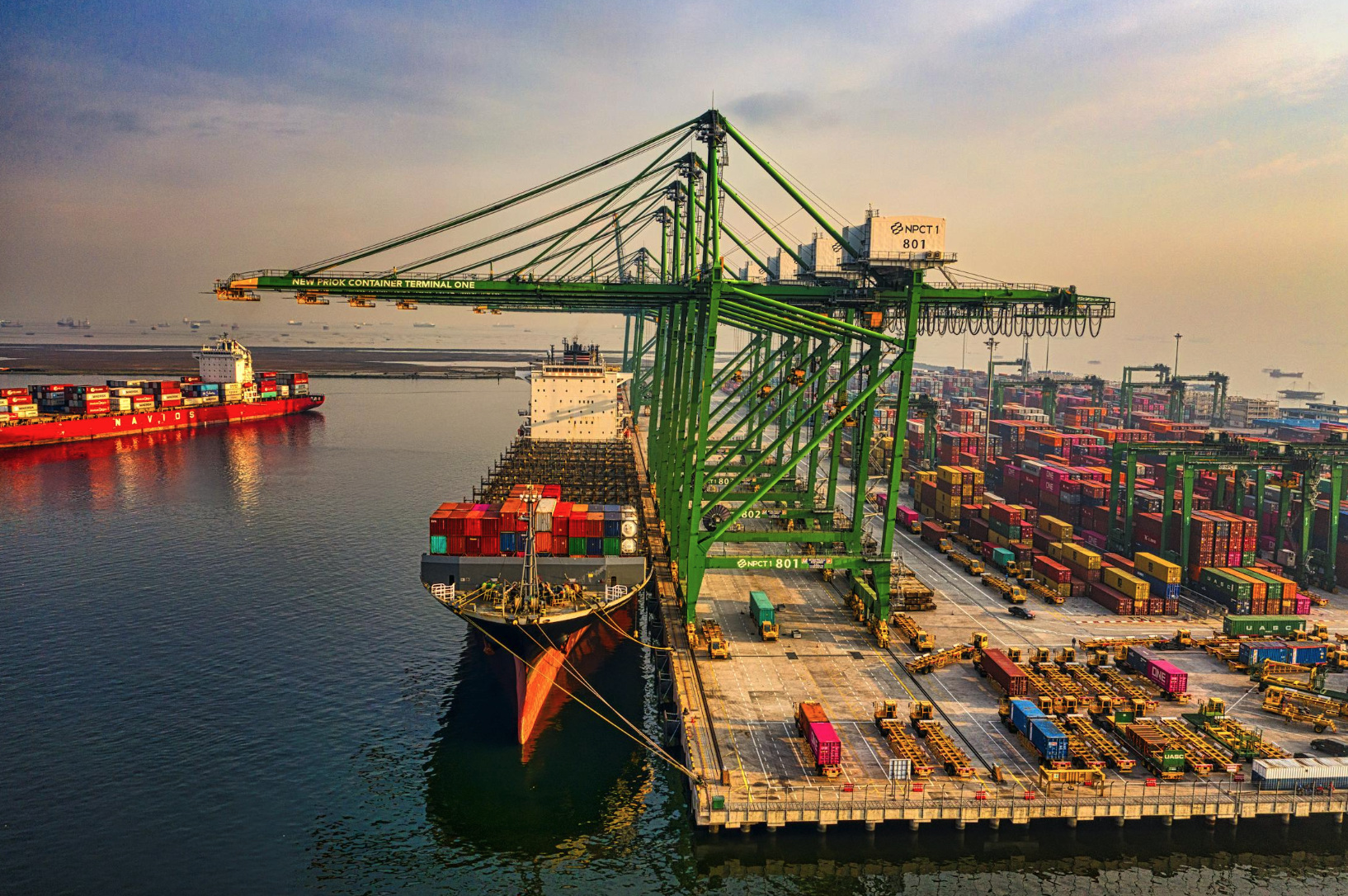

On March 19, 2026, South Korea’s Incheon New Port crossed a critical threshold: it entered the final construction phase of a fully automated container terminal. Not semi-automated. Not hybrid. Fully autonomous.
No drivers. No yard operators. No human intervention in day-to-day container movement.
Just software, orchestration, and machines executing with precision.
This milestone doesn’t just mark progress for one port. It signals something much bigger:
The global container ecosystem is officially entering the era of “lights-out terminals.”
What Incheon Actually Represents
Incheon’s new terminal is part of a broader wave of next-generation port infrastructure being designed from the ground up around automation.
These terminals are built with:
Automated stacking cranes (ASC)
Autonomous yard vehicles (AGVs)
AI-driven scheduling and orchestration systems
Fully integrated Terminal Operating Systems (TOS)
The goal is simple but ambitious:
Eliminate human-driven variability and unlock continuous, optimized throughput.
In practical terms, that means:
24/7 operations without labor constraints
Reduced accidents and safety risks
Higher container throughput per acre
Predictable, software-controlled yard flows
For ports facing land scarcity, labor shortages, and rising global demand, this is not just innovation. It’s survival.
Why Full Automation Is Accelerating Now
For years, automation in ports moved slowly. High costs, labor resistance, and operational complexity kept adoption fragmented.
That era is ending.
Three forces are now accelerating full automation:
1. Productivity Ceilings Have Been Reached
Traditional terminals have hit diminishing returns. Adding more labor or equipment no longer scales efficiently.
2. Labor Volatility
Strikes, shortages, and rising labor costs are forcing operators to rethink dependency on human-driven workflows.
3. Global Throughput Pressure
E-commerce, nearshoring, and supply chain volatility have increased demand for faster, more predictable port operations.
Incheon isn’t an experiment. It’s a response.
The Hidden Reality: Most Ports Can’t Follow Incheon
Here’s where the story gets more interesting.
While headlines celebrate fully autonomous terminals, the vast majority of ports globally are nowhere close to that reality.
Especially in the U.S. and Europe.
Why?
Because full automation requires:
Billions in capital investment
Greenfield infrastructure (building from scratch)
Multi-year construction timelines
Deep regulatory and labor negotiations
For most operators, this is not feasible.
So instead, they exist in a growing and uncomfortable middle ground:
Partially automated, operationally complex, and increasingly inefficient compared to next-gen terminals.
The “Yard Chasm”: Where Efficiency Breaks Down
This middle state creates what can best be described as a yard chasm.
On one side:
Fully automated terminals like Incheon
Seamless orchestration
Machine-led precision
On the other:
Legacy terminals
Manual coordination
Fragmented systems
And in between?
Hybrid yards struggling with:
Disconnected systems (TOS, YMS, spreadsheets, radios)
Inefficient truck turn times
Poor asset utilization
Lack of real-time visibility
Human-dependent decision-making bottlenecks
This is where performance quietly erodes.
Not in the cranes. Not on the ships.
In the yard.
Why Hardware-Led Automation Isn’t the Only Path
The industry narrative often frames automation as a hardware problem:
Buy autonomous trucks.
Install robotic cranes.
Build a new terminal.
But this overlooks a critical truth:
Hardware without orchestration is just expensive chaos.
Even in advanced terminals, the real advantage comes from how systems are coordinated, not just what machines are deployed.
This is where a different approach is emerging:
Software-led automation.
Bridging the Gap: A Software-First Approach to Yard Transformation
Instead of waiting for full-scale infrastructure replacement, leading operators are beginning to ask a different question:
How do we unlock automation-level efficiency using what we already have?
This is the gap that companies like Terminal Industries are built to solve.
Rather than requiring:
New fleets of autonomous vehicles
Massive capital expenditure
Years of construction
Terminal focuses on:
1. AI-Driven Yard Orchestration
Turning fragmented yard operations into a coordinated, intelligent system.
2. Real-Time Visibility
Creating a live, dynamic view of yard activity across assets, containers, and flows.
3. Decision Automation
Replacing manual coordination with algorithmic optimization.
4. Incremental Transformation
Allowing terminals to improve performance without ripping and replacing infrastructure.
From “Stuck in the Middle” to Competitive Again
The reality is stark:
Not every terminal will become Incheon
Not every operator can rebuild from scratch
But every yard still needs to compete
The future of port operations will not be defined solely by fully autonomous megaprojects.
It will be defined by how effectively existing infrastructure is upgraded, optimized, and orchestrated.
The Bigger Shift Happening Right Now
Incheon is not just a milestone.
It’s a signal.
A signal that:
Full automation is no longer theoretical
Performance benchmarks are being reset globally
The gap between leaders and laggards is widening
But also:
The path to modernization is no longer binary.
It’s no longer:
Fully manual or fully autonomous
There is now a third path:
Software-led transformation that bridges the yard chasm.
Final Thought
While the world watches fully autonomous terminals rise from the ground, the more immediate battle is happening in existing yards.
Not in future builds.
But in today’s operations.
And the winners will not just be those who invest the most in hardware.
They will be those who orchestrate what they already have: better, faster, and smarter than anyone else.


