
The race toward warehouse automation is accelerating fast.
According to recent Gartner predictions, by 2030, more than 50% of warehouse operations are expected to adopt some form of robotics or automation to support workload handling and fulfillment execution. Across the industry, companies are investing heavily in robotic picking systems, autonomous forklifts, AI-powered inventory management, and warehouse orchestration software as operators push for faster throughput, lower labor dependency, and greater operational resilience.
The message is clear: the warehouse is becoming autonomous.
But there’s one major problem.
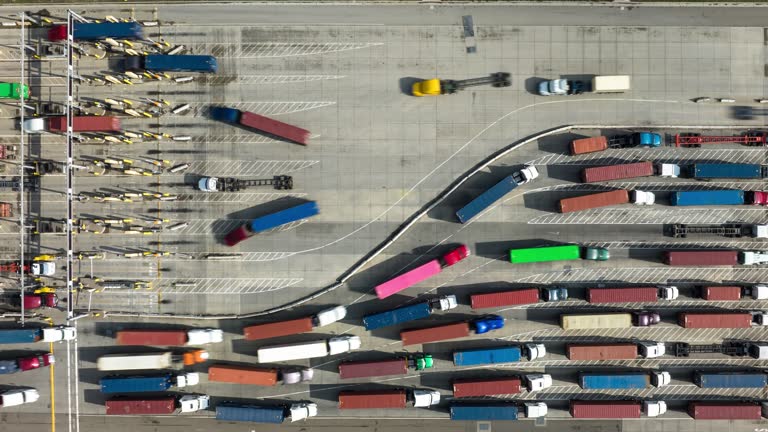
Most supply chains are still treating the yard like a parking lot.
While billions are being poured into automating what happens inside the four walls, many facilities still rely on manual check-ins, radio communication, disconnected systems, clipboards, spreadsheets, and limited visibility to manage the movement of trailers, drivers, and equipment outside the warehouse doors.
And that disconnect matters more than ever.
Automation Moves Faster Than Bottlenecks
The more efficient a warehouse becomes, the more pressure it places on upstream and downstream operations.
A robotic warehouse capable of processing inventory faster than ever before still depends on trailers arriving at the correct dock, at the correct time, with the correct priority. If yard operations cannot coordinate that movement in real time, warehouse automation simply accelerates congestion.
In many cases, warehouse automation doesn’t eliminate operational friction. It exposes it.
A facility may reduce picking times by minutes, but still lose hours due to:
trailer misplacement
gate congestion
detention delays
poor dock coordination
lack of real-time visibility
disconnected yard workflows
The result is an increasingly common industry problem: highly advanced warehouse operations sitting behind inefficient yard execution.
The Yard Is Becoming the Operational Control Layer
Historically, supply chain technology investment has focused heavily on Transportation Management Systems (TMS) and Warehouse Management Systems (WMS). The yard, despite connecting both environments physically and operationally, has often remained under-digitized.
That is starting to change.
As automation adoption increases, operators are recognizing that the yard is no longer a secondary operational layer. It is becoming the coordination engine that determines whether autonomous systems can operate efficiently at scale.
Robots can automate fulfillment.
But they cannot solve:
trailer orchestration
gate throughput
yard congestion
spotter coordination
real-time execution decisions
physical flow synchronization across the site
Those challenges increasingly require a new category of infrastructure built around visibility, orchestration, and execution intelligence.
Why the Future of Automation Extends Beyond the Warehouse
The industry conversation around automation often focuses on what is visible: robotic arms, autonomous forklifts, drones, humanoids, and AI-powered warehouse systems.
But the facilities that achieve the greatest operational gains in the next decade will likely be the ones that solve something less visible:
the coordination of physical operations across the entire site.
That includes the yard.
Because in reality, the warehouse and yard are not separate operational environments anymore. They are deeply interconnected systems. When one moves faster, the other must evolve alongside it.
The future of autonomous logistics will not be defined solely by what happens inside the warehouse walls.
It will be defined by how intelligently the entire operation moves together.
And increasingly, that future starts in the yard.


