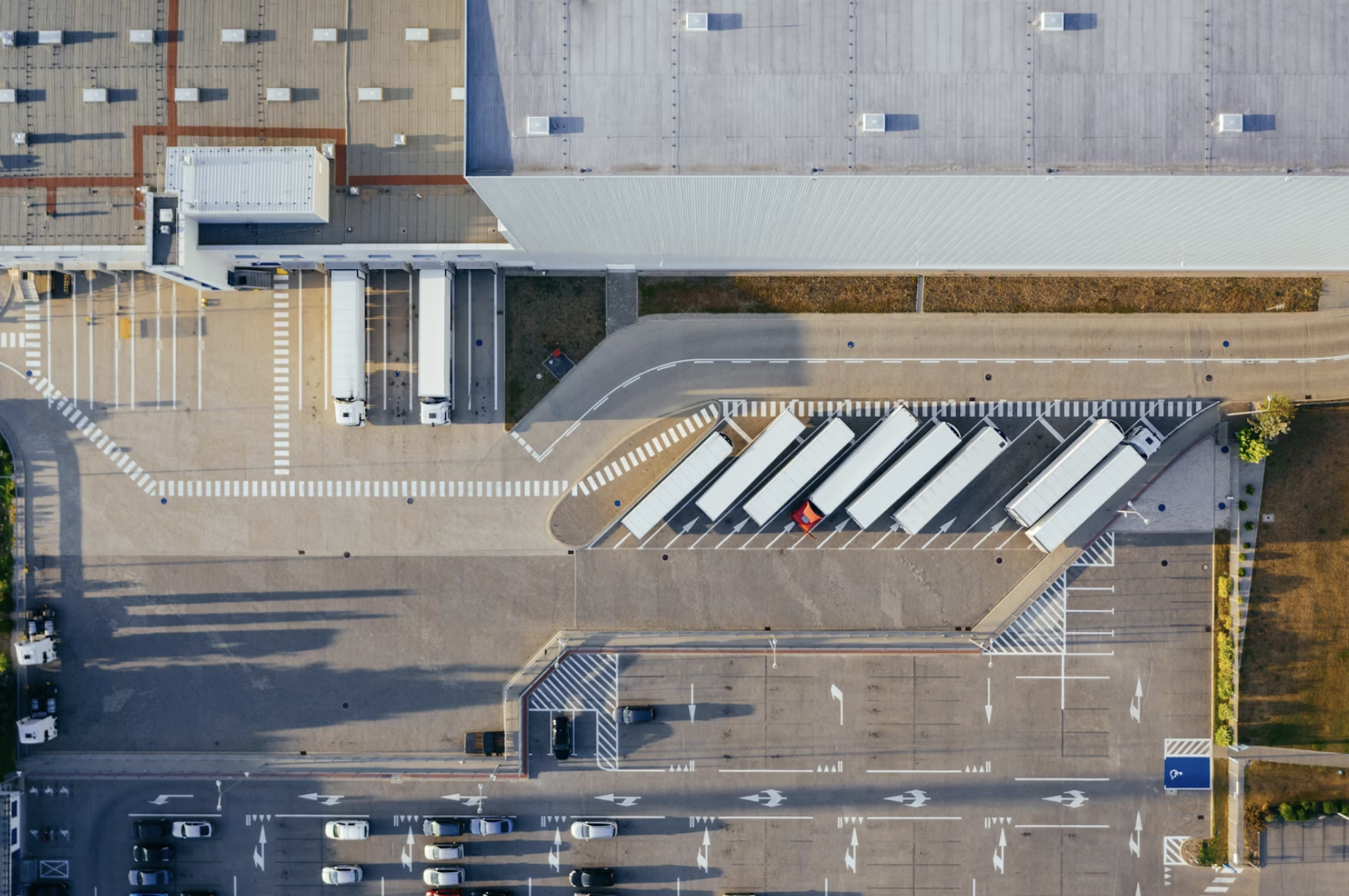

Most supply chain issues don’t start in the warehouse.
They start earlier: at the gate, in the yard, and in the handoff between. transportation and operations. The challenge is not visibility. Most operators already know something is wrong. The challenge is execution. Decisions are delayed, coordination breaks down, and small inefficiencies compound quickly across the yard.
That’s why the yard has quietly become one of the most critical, and least optimized, layers in logistics.
Why Do Yard Operations Fail in Logistics?
In most facilities, the same patterns show up repeatedly. Trucks arrive without clear sequencing. Gate check-ins take longer than expected. Trailers are staged in the wrong locations. Dock assignments shift. Spotters wait for instructions. By the time everything is coordinated, the schedule has already slipped.
“A 20-minute delay at the gate creates a full ripple effect… trucks circling, spotters waiting, lack of coordination with the dock.” Darin Brannan, CEO, Terminal Industries.
These issues are not isolated. They are connected. The yard becomes a holding area for uncertainty, absorbing variability from transportation and passing it downstream into the warehouse. One of the clearest indicators is driver utilization. A truck may have 11 hours of available drive time, but on average only about 6.5 hours are actually used. A significant portion of that lost time happens in the yard.
At scale, this is not just inefficiency. It is lost capacity.
Why Do Traditional Yard Management Systems Struggle to Scale?
Most yard systems were built to track assets and digitize workflows. They provide visibility, but they rely on predefined rules to operate. That works in stable environments. The yard is not one of them.
Conditions change constantly. Arrival times shift. Dock availability fluctuates. Priorities evolve throughout the day. Systems that depend on static logic struggle to keep up.
“Most systems are more like notebooks… they digitize inefficiency rather than eliminate it.” Darin Brannan, CEO, Terminal Industries
As a result, operators still rely heavily on manual coordination. Decisions are reactive. Exceptions are handled outside the system. The gap between visibility and execution remains.
How Does AI Improve Yard Execution?
AI-native platforms change how decisions are made in the yard. Instead of relying on static workflows, they create a real-time operational layer that continuously evaluates and adjusts actions across the yard.
“Smart Yard 3.0 is the agentic AI layer… enabling exception handling, task delegation, reprioritization, and continuous optimization.” Darin Brannan, CEO, Terminal Industries
In practice, this means:
Gate check-ins move from manual processing to automated, vision-
based intake
Asset locations are continuously tracked and updated
Tasks are dynamically assigned based on real-time conditions
Movements from gate to yard to dock are coordinated as a single flow
In one example, a process that previously took over an hour from gate to dock was reduced to minutes, with check-in times dropping to seconds.
The shift is not just automation. It is the ability to make decisions faster and with greater precision.
What Is a Yard Operating System?
A yard operating system replaces isolated workflows with a unified execution layer. Instead of managing individual tasks, it orchestrates the entire movement of assets, people, and equipment across the yard.
“You move from a yard management platform to a yard movement platform.” Darin Brannan, CEO, Terminal Industries
This approach models the yard as a system of:
Actors (drivers, spotters, dock workers)
Assets (trailers, containers, equipment)
Actions (moves, assignments, check-ins)
Missions (end-to-end workflows from arrival to departure)
By structuring operations this way, the system can dynamically coordinate activities across gate, yard, and dock, rather than relying on predefined sequences.
How Can You Reduce Gate Delays and Yard Congestion?
Reducing congestion starts with improving how decisions are made at the point of entry. Gate delays often cascade into larger operational issues because they disrupt sequencing across the entire yard.
AI-native systems address this by:
Automating gate check-ins with computer vision
Validating data in real time to eliminate errors
Assigning next actions immediately based on system conditions
Synchronizing yard movements with dock availability
This reduces idle time, improves throughput, and prevents delays from propagating through the operation.
What Replaces Traditional Yard Management Systems?
The next phase of yard technology is not an incremental upgrade to YMS. It is a shift toward AI-driven execution platforms that operate continuously and adapt in real time.
“You need a yard operating system… not just a yard management system.” Darin Brannan, CEO, Terminal Industries
These systems combine:
Real-time visibility
Dynamic workflow orchestration
Continuous optimization
Integration with warehouse and transport systems
The result is a yard that operates as a coordinated system rather than a collection of disconnected processes.
Where to Start
For most operations, the starting point is identifying where execution is breaking down today. Long gate check-in times, difficulty locating assets, and constant rescheduling are all signals that the current system is not keeping up with operational complexity.
Addressing these issues requires more than incremental fixes. It requires rethinking how decisions are made across the yard.
Terminal Industries focuses on building that operational layer, from gate to dock, so yard activity is coordinated as a connected system rather than managed step by step.


