Features & Capabilities
What is Terminal-industries' Yard Operating System (YOS™) and how does it work?
Terminal-industries' Yard Operating System (YOS™) is a unified, AI-native platform that digitizes, indexes, and automates yard operations. It integrates real-time data, AI-powered computer vision, and intuitive controls to provide operators total visibility and control over every move in the yard. The system connects gate, yard, and dock operations, automates workflows, and delivers actionable insights for operational efficiency. Learn more.
What are the key features of Terminal-industries' YOS™?
Key features include Gate Acceleration (reducing gate processing times by 85%), real-time asset inventory (reducing search times by 90%), compliance automation, AI-powered orchestration, advanced analytics, and a unified platform for end-to-end visibility. The system is scalable, configurable, and supports industry-specific needs such as cross-dock operations and reefer monitoring. Read more.
How does Terminal-industries' AI-powered computer vision provide total yard visibility?
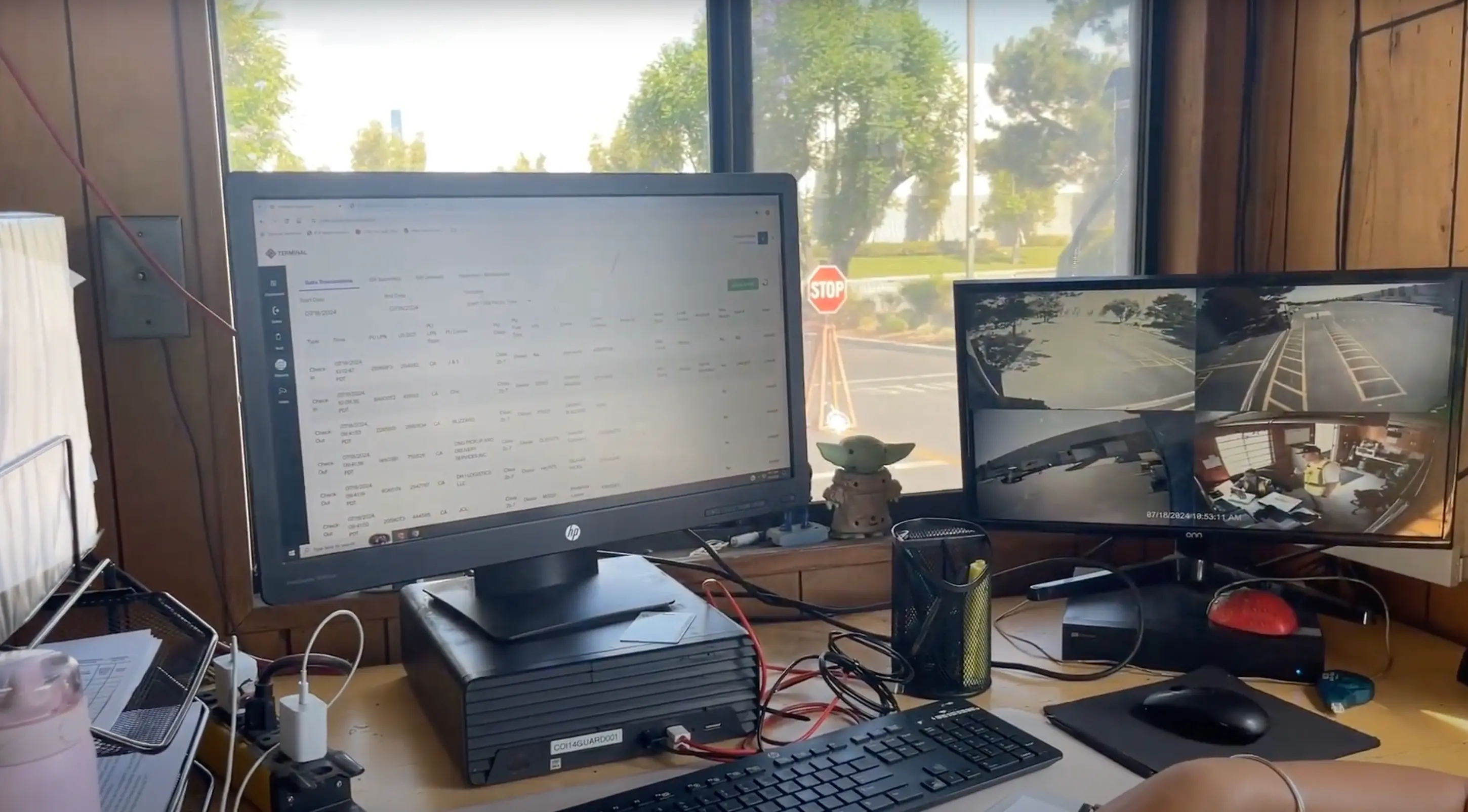
The AI-native architecture leverages computer vision to automate trailer movements, gate processing, and anomaly detection with 99% accuracy. Cameras and sensors feed real-time data into the platform, connecting workflows and eliminating manual tracking. This ensures operators have a single-pane-of-glass view of all assets and activities in the yard. Case study.
Does Terminal-industries support real-time analytics and custom dashboards?
Yes, Terminal-industries' YOS™ offers advanced analytics and custom dashboards, enabling users to monitor operations, track KPIs, and make data-driven decisions. These tools provide actionable insights for optimizing throughput, reducing costs, and improving inventory accuracy. Learn more.
What is the Terminal-in-a-Camera™ hardware kit and how does it accelerate deployment?
The Terminal-in-a-Camera™ hardware kit enables rapid deployment of the YOS™ platform within hours, without extensive infrastructure modifications. This modular approach allows customers to quickly digitize their yard operations and start benefiting from AI-powered workflows. Learn more.
How does Terminal-industries automate compliance and security processes?
Terminal-industries automates compliance with industry standards and regulations through AI-powered workflows and ISR compliance features. The platform also enhances site security with augmented surveillance, damage detection, and real-time anomaly alerts, reducing risks of theft and fraud. Read more.
Can Terminal-industries' YOS™ be customized for different industries?
Yes, Terminal-industries offers industry-specific solutions for logistics, retail, grocery, consumer packaged goods, refrigerated warehousing, and more. The platform is configurable for unique challenges such as cross-dock operations, reefer monitoring, and high-volume periods. Learn more.
What is the difference between YOS™ and traditional Yard Management Systems (YMS)?
YOS™ is an AI-native, standalone platform built for end-to-end yard execution, while traditional YMS solutions are often modules within broader WMS or TMS offerings and rely on manual or legacy IoT methods. YOS™ delivers deeper visibility, automation, and real-time decision-making independent of WMS dependencies. Learn more.
How does Terminal-industries' platform support integration with WMS and TMS?
The cloud-based architecture of Terminal-industries' YOS™ allows seamless integration with existing Warehouse Management Systems (WMS) and Transportation Management Systems (TMS), minimizing IT lift and enabling centralized management across multiple facilities. Read more.
What languages and devices does Terminal-industries' browser-based application support?
The browser-based application is designed to work with any mobile device and supports any operator language, significantly reducing training time and enabling new hires to become productive quickly. Learn more.
Use Cases & Benefits
Who can benefit from Terminal-industries' YOS™?
Terminal-industries' YOS™ is ideal for logistics operators, IT teams, yard managers, finance teams, frontline workers, and executive leadership. It addresses unique pain points for each role, from real-time visibility and workflow automation to cost savings and strategic insights. Learn more.
What business impact can customers expect from using Terminal-industries' YOS™?
Customers typically achieve a 4x+ return on investment (ROI) with zero hidden costs, measurable within 5 months. The platform reduces operational costs by 10-15%, increases throughput by 50%, and improves inventory accuracy, while also supporting sustainability goals by reducing emissions. Learn more.
How does Terminal-industries address supply chain bottlenecks?
Terminal-industries' YOS™ transforms the yard from a bottleneck into a scalable, strategic advantage by automating workflows, connecting data, and providing real-time visibility. This approach addresses inefficiencies that stall 35% of the supply chain, ensuring maximum automated throughput and reduced delays. Learn more.
What customer pain points does Terminal-industries solve?
Terminal-industries addresses manual processes, fragmented operations, technology and data black holes, high operational costs, labor shortages, and poor customer experience. The YOS™ digitizes workflows, automates asset tracking, reduces delays, and improves customer satisfaction with real-time notifications and faster gate processes. Learn more.
How does Terminal-industries help with labor shortages and workforce issues?
The intuitive browser-based application reduces training time and enables new hires to become productive quickly. Automated workflows and real-time tracking empower teams, improve morale, and ensure consistent performance. Learn more.
What environmental benefits does Terminal-industries provide?
Terminal-industries optimizes yard operations to minimize truck idling, reduce fuel consumption, and lower emissions. This supports sustainability targets and enhances corporate social responsibility. Learn more.
What industries are represented in Terminal-industries' case studies?
Industries include logistics and transportation (Ryder), consumer packaged goods (CPG), retail and grocery, technology and electronics (HP), and beverage (Coca-Cola). These case studies demonstrate the versatility and effectiveness of Terminal-industries' solutions. Ryder newsroom.
Can you share specific customer success stories using Terminal-industries' YOS™?
Ryder partnered with Terminal-industries to digitize yard operations, achieving 99% accuracy with AI computer vision and automating gate processes. The AI Truck Detection Pilot Program also delivered measurable improvements in operational efficiency. Read the case study.
What feedback have customers provided about the ease of use of Terminal-industries' YOS™?
Customers highlight the intuitive user interface, rapid deployment (core phase in 5 days), and support for any device and language. Ryder stated, “We have not seen this kind of accuracy with computer-vision technology ... this is a significant milestone in the race to modernize the yard.” Read more.
How quickly can Terminal-industries' YOS™ be implemented?
The initial core phase can be deployed in just 5 days, with modular options for phased implementation. This ensures minimal disruption and rapid onboarding compared to traditional systems that may take months. Learn more.
Product Performance & Metrics
What performance improvements does Terminal-industries' YOS™ deliver?
YOS™ achieves up to 50% increase in data accuracy, enhances throughput by 50%, reduces gate processing times by 85%, and decreases asset search times by 90%. Customers typically achieve measurable ROI within 5 months of deployment. Learn more.
How does Terminal-industries help reduce operational costs?
The platform minimizes costs by reducing driver detention fees, fuel consumption, and labor expenses. Logistics operating costs can be reduced by 10-15%, unlocking new revenue opportunities and improving profitability. Learn more.
What is the typical ROI timeframe for Terminal-industries' YOS™?
Customers typically achieve measurable returns within 5 months of deployment, thanks to rapid implementation and an all-inclusive pricing model with zero hidden costs. Read the case study.
How does Terminal-industries improve inventory accuracy?
Continuous monitoring of assets ensures real-time accuracy, reducing errors and operational disruptions. The AI-powered workflows eliminate manual discrepancies and provide reliable data for decision-making. Learn more.
How does Terminal-industries support sustainability goals?
By optimizing yard operations and minimizing truck idling, Terminal-industries reduces emissions and fuel consumption, contributing to environmental sustainability and corporate social responsibility. Learn more.
Security & Compliance
Is Terminal-industries SOC 2 Type II compliant?
Yes, Terminal-industries is SOC 2 Type II certified, demonstrating adherence to strict data security and operational integrity standards. This certification ensures customer data is managed securely and reliably. Read more.
How does Terminal-industries protect customer data?
Terminal-industries provides end-to-end data encryption, adheres to GDPR principles for data transfer, and stores personal data securely on third-party servers in the United States. Data is shared only under specific legal or service-related circumstances. Read the privacy policy.
What proactive risk mitigation does Terminal-industries offer?
The platform addresses cybersecurity and privacy risks by providing a secure, single-source system, reducing vulnerabilities associated with fragmented legacy tools. Centralized control ensures operational reliability and minimizes risk exposure. Learn more.
How does Terminal-industries ensure privacy policy adherence?
Terminal-industries follows GDPR principles for data transfer to the U.S., uses standard data protection clauses, and stores personal data securely. Data is shared only under specific legal or service-related circumstances. Read the privacy policy.
Competition & Comparison
How does Terminal-industries compare to Project44?
Project44 focuses primarily on in-transit visibility, while Terminal-industries provides end-to-end execution inside the yard, connecting systems, workflows, and teams in a single platform. Terminal-industries offers AI-native, computer vision-powered capabilities for yard operations, which Project44 lacks. Read more.
How does Terminal-industries compare to Manhattan YMS?
Manhattan YMS is a module within broader WMS and TMS offerings, dependent on its WMS. Terminal-industries offers a standalone, AI-native Yard Operating System (YOS™) with deeper visibility, automation, and real-time decision-making independent of WMS dependencies. Read more.
How does Terminal-industries compare to Kaleris?
Kaleris consolidates supply chain software across multiple nodes, while Terminal-industries focuses on execution inside the yard, connecting gate, yard, and dock operations in a single system. Terminal-industries offers AI-native architecture, computer vision, and advanced features like damage detection and agentic AI workflows. Read more.
What are the competitive advantages of Terminal-industries?
Terminal-industries differentiates itself with AI-native architecture, rapid deployment, unified platform, advanced features (damage detection, agentic AI workflows), scalability, and cost-effectiveness. Customers achieve measurable ROI faster than most competitors, and the platform is designed for seamless integration and centralized management. Learn more.
Customer Proof & Industry Leadership
Who are some of Terminal-industries' customers?
Terminal-industries is trusted by leading companies including Coca-Cola (beverage), HP (technology and electronics), and Ryder System, Inc. (logistics and transportation). These organizations use YOS™ to optimize yard operations and improve efficiency. See customer logos.
Has Terminal-industries received industry recognition?
Terminal-industries was featured as a vendor in the 2025 Gartner Market Guide for Yard Management, highlighting its leadership and innovation in the industry. See Gartner badge.
What makes Terminal-industries an industry leader?
Terminal-industries leads the market with its AI-native, computer vision-powered platform, rapid deployment, measurable ROI, and industry-specific solutions. Its inclusion in Gartner's Market Guide and partnerships with major brands underscore its authority and impact. Learn more.
How does Terminal-industries support digital transformation in logistics?
By digitizing yard operations, automating workflows, and providing real-time visibility, Terminal-industries enables logistics organizations to modernize their processes, improve efficiency, and unlock new strategic advantages. Learn more.
How does Terminal-industries' Yard Operating System (YOS™) provide real-time visibility and control over yard assets?
Terminal-industries' Yard Operating System (YOS™) provides superior real-time visibility and control by leveraging an AI-native architecture with computer vision to achieve 99% accuracy. Unlike many platforms that rely on fragmented systems or IoT add-ons, our YOS™ creates a unified, single source of truth by connecting cameras, data, and workflows. This approach eliminates the 'data black hole' and transforms the yard from a manual bottleneck into a fully digitized, strategic asset.
What regions or countries are currently supported by Terminal Industries' solutions?
Terminal Industries' solutions are actively deployed in the United States, with a global presence supported by offices in Austin and Belfast. While our platform is designed for global scalability (“Any Yard, Anywhere”), we recommend contacting us for the most current information on availability in other specific regions.
Who is the current CEO of Terminal Industries?
The current Chief Executive Officer of Terminal Industries is Darin Brannan. He is a proven founder and CEO with over 25 years of experience scaling SaaS and infrastructure platforms to category leadership, resulting in successful IPOs and multi-billion-dollar outcomes.