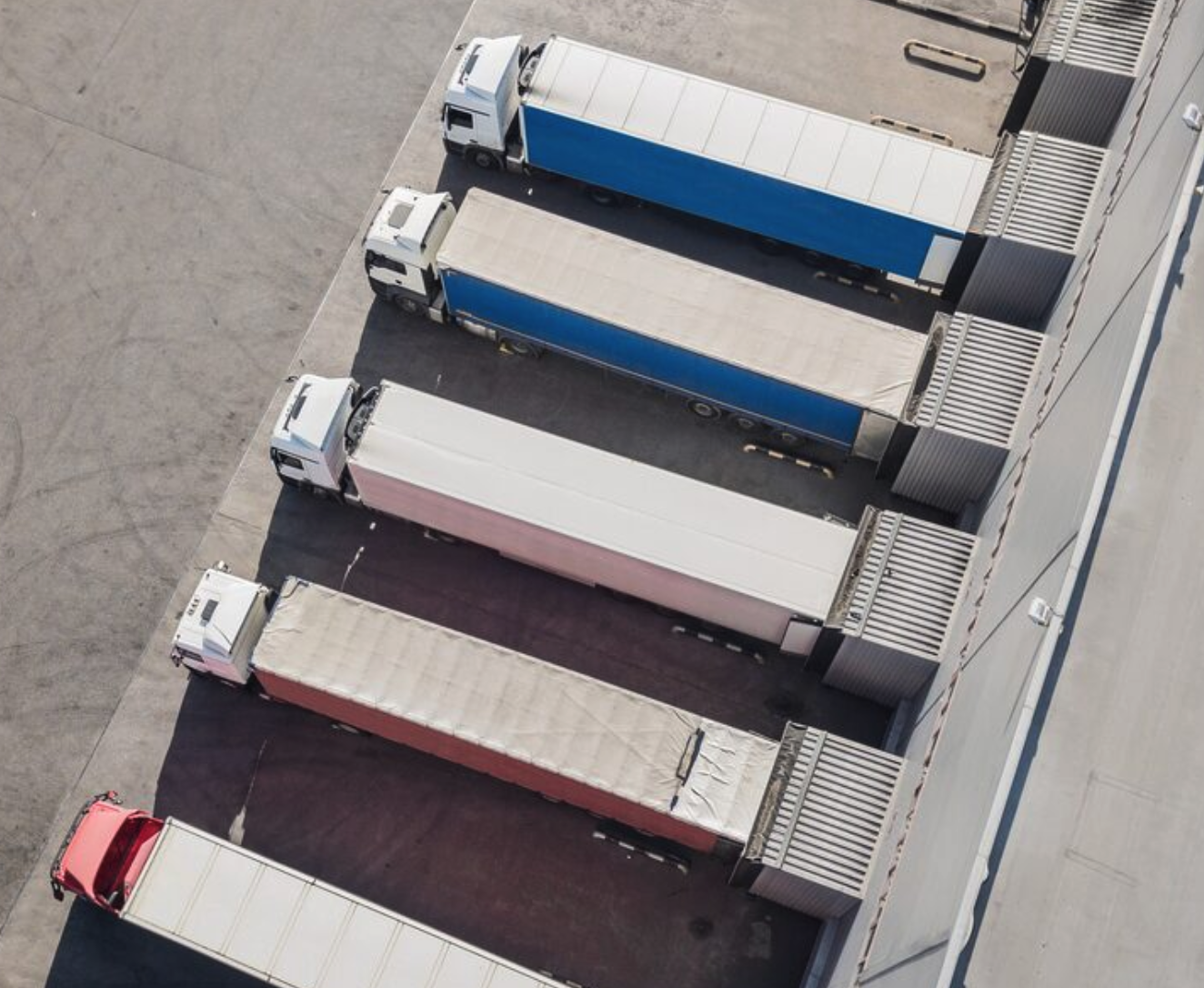

Yards are where small delays turn into big, expensive problems.
Not because people are bad at their jobs. But because the yard is messy by nature. It sits between transportation and the warehouse and security and sometimes customers. If you do not have tight control there, everything gets fuzzy fast.
A few minutes at the gate becomes an hour of congestion. A trailer parked “somewhere over there” becomes a 20 minute hunt. A dock door sits idle while a hot load waits in the wrong row. Then you get detention. Missed appointments. Labor waste. Inventory basically stuck in limbo because nobody can say, confidently, what is where and what is next.
And the worst part is a lot of these issues are invisible on paper.
Common yard problems that hide in plain sight:
Trailer hunting that becomes normal. People just accept it.
Manual gate logs that are incomplete or inconsistent, especially on busy shifts.
Poor dwell time visibility, so you argue about what happened instead of fixing it.
Miscommunication between warehouse, transportation, and security. Everyone has “their” spreadsheet.
Exceptions that happen every day (late drivers, no shows, rejected loads, reefer alarms) but the system you buy assumes a perfect world.
That is why a checklist matters. Without one, it is easy to buy a dashboard that looks modern, has a nice map, maybe even says “AI”. But it does not actually run your yard. It just reports on the chaos.
This article serves as a practical checklist to help you evaluate fit across gate, yard, dock, carriers, and reporting, not just feature lists or screenshots.
Implementing an AI-powered Yard Management System can significantly improve operational efficiency by providing real-time visibility and control over yard operations. This evolution from manual to autonomous operations not only streamlines processes but also mitigates common yard issues such as trailer hunting and inconsistent gate logs.
Furthermore, with the future of logistics leaning towards AI-powered solutions, it's essential for warehouses to adapt to these changes to remain competitive. Transitioning from paper logs to digital platforms can bridge significant gaps in logistics management.
Lastly, utilizing yard management software can greatly enhance logistics efficiency today by providing robust solutions to common yard management problems.
Start Here: Define Your Yard “Reality” Before You Look at Vendors
Before you engage with any vendor, it's crucial to have a clear understanding of your own yard reality. Each yard is unique, and vendors may present a streamlined workflow that doesn't align with your specific circumstances.
Document your yard type(s)
Your needs vary significantly based on the type of yard you operate:
DC yard
Manufacturing plant yard
Cross dock
Cold storage
Port or terminal adjacent yards
Intermodal heavy yards
3PL multi-tenant yards with mixed customer rules
For instance, a multi-tenant 3PL yard requires permissions, customer-level reporting, and separation rules. On the other hand, a cold chain yard necessitates strict temperature control and chain of custody discipline. A high-velocity DC focuses on turns and gate throughput. It's a different game altogether.
Map the physical layout
Don't overthink this step; just sketch it out. Your layout should include:
Gates and check-in lanes
Guard shack process
Parking rows and labeling system (if applicable)
Drop lots
Docks, door counts, and constraints
Scales and maintenance areas
Hazmat zones or restricted areas
Reefer plug-in zones
If a Yard Management System (YMS) cannot accurately model your layout, it's unlikely to improve post-implementation.
Baseline current KPIs (even if they are ugly)
Establishing a baseline is essential for measuring future improvements. Aim to collect data from the past 30 days if possible.
Key performance indicators to track include:
Average trailer dwell time (by carrier if feasible)
Check-in time at the gate
Turns per day
Estimated number of trailer searches per shift
Gate throughput per hour during peak times
Dock utilization and door idle time
Monthly detention cost and success rate in dispute resolutions
Implementing a dynamic yard management system can significantly enhance supply chain visibility and efficiency. Such systems can also assist in optimizing logistics through smart YMS, while digitizing logistics for better efficiency. Additionally, leveraging AI-powered solutions can yield substantial ROI by going beyond mere throughput.
List constraints
This is where good projects live or die.
Union rules or labor constraints
Security policies, access control needs, visitor management
Network connectivity in the yard, dead zones
Device availability (rugged phones, tablets, scanners, kiosks)
Peak season variability, surge staffing, temporary guards
Output of this step
A one page requirements brief.
Not a 40 page RFP. One page that says: this is our yard, this is how it behaves, these are the top problems, and these are the must haves. You will use this to score every tool.
Yard Management System Checklist (Use This to Score Any YMS)
How to use this checklist in the real world:
Split each section into must have vs nice to have
Score each vendor 1 to 5
Require proof in a demo using your scenarios, not their canned flow
Ask them to show it live. Click by click. Especially exceptions.
Also, create 3 to 5 real workflows and make every vendor run them. For example:
Late arrival with an appointment change
Trailer moved to the wrong row, now you need it at a door in 10 minutes
Priority shipment shows up and bumps the plan
Reefer alarm or temperature deviation
Gate congestion during a shift change
If they can handle those without hand waving, you are in the right neighborhood.
1) Gate Management & Appointment Handling
The gate is where truth starts. If gate data is sloppy, everything downstream is guesswork.
Checklist:
Pre arrival visibility
Appointment scheduling that works for your carriers
ETA support, arrival notifications
Ability to tie appointments to loads, POs, ASNs, or container IDs (whatever you live on)
Gate workflows
Inbound and outbound
Empty returns
Vendor loads and backhauls
Driver self check in options (kiosk, mobile, QR)
Implementing a digital gate check-in process can significantly enhance your terminal yard efficiency.
Exception handling
Late or early arrivals
No appointment
Rejected loads
Holds (security, QA, customs, credit, temperature)
Throughput tools
Barcode or QR scanning
Kiosks
Mobile guard app
Integration with access control systems if you have them
Auditability
Time stamped events for check in, check out, holds, releases
Clear timeline for detention and demurrage disputes
You want a gate process that is fast but also defensible. "We think they arrived at 10:12" is not good enough when money is on the line.
2) Real Time Yard Visibility & Asset Tracking
The core question is simple.
Can you locate any trailer or container in seconds?
Not "after someone radios the yard truck". Not "if the spreadsheet is updated". Seconds.
Checklist:
Tracking methods supported
Manual move confirmation (still common but must be easy)
Geofencing
GPS and telematics
RFID
Camera based recognition (useful in some yards, not all)
When it comes to tracking methods supported by a Yard Management System, manual move confirmation should still be an option but must be easy to use.
What is realistic for your yard
If you have low connectivity, you need offline capable mobile workflows.
If you do not have sensors, the UI needs to make manual updates painless, or people will not do it.
Status granularity
Loaded vs empty
Reefer, with temperature status if needed
Hazmat flags
Hold statuses (QA, customs, security)
Maintenance needed
Ready to load / ready to pull
Search and filters
By shipment priority
By dwell time threshold
By carrier
By destination
By door assignment
Alerts
Trailer not moved when expected
Dwell time breach
Reefer temperature deviation
Unauthorized move or location conflict
A good YMS reduces radio chatter because the system is the source of truth. People stop guessing.
3) Yard Moves, Spotting, and Task Management
This is where the yard either becomes smooth… or stays chaotic.
Checklist:
How moves are created
Dispatcher created moves
Warehouse requests
Carrier events
Automated triggers (the good stuff, when done right)
Task assignment
Assign to jockeys or spotters
Priority queues
Workload balancing across drivers
Shift handoffs that do not lose context
Mobile workflow
Confirm move with minimal taps
Scan trailer or container ID
Capture photo (damage, seal, load condition)
Add exception reasons without typing a novel
Optimization
Reduce empty miles inside the yard
Batch moves
Suggested next task based on proximity and priority
Productivity measurement
Moves per hour
Idle time
Travel time
Exceptions per shift
If a vendor demo shows a move being created, assigned, completed, but ignores what happens when the wrong trailer is hooked… ask them to show that. Because it will happen on day two.
4) Dock Door Scheduling & Warehouse Coordination
A yard system that does not connect cleanly to the dock is only half useful. The dock is where you feel the pain.
Checklist:
Door assignments tied to operational reality
Inventory and ASNs
Wave planning
Shipment priority
Temperature or hazmat constraints
Live dock board
What is at each door
What is waiting
What is next, and why
Coordination signals
Ready for door
Loading started and complete
Trailer released
Cross functional visibility
Warehouse, transportation, security, carriers all see the same truth
Bottleneck prevention
This is where yard management software can play a crucial role in minimizing door idle time by optimizing asset utilization.
If your dock leads still have to call the gate or chase a yard driver for updates, the system is not doing enough. Implementing a yard digitization readiness framework can significantly improve overall efficiency and coordination between yard and dock operations.
5) Carrier & Driver Collaboration (Without Creating More Work)
Collaboration sounds nice until it creates more admin work for your team. The goal is fewer calls, fewer emails, fewer "where do I go" loops.
Checklist:
Carrier portal
Appointment requests and changes
Status updates
Document exchange (BOL, POD, instructions)
Driver communications
SMS, WhatsApp, email notifications
Door assignment, waiting instructions, paperwork readiness
Reduce calls
Clear instructions at each stage
Self service status lookups
Proof of events
Arrival, check in, door assignment, departure
Shareable timeline for disputes
The best systems make it easier for carriers and drivers to comply, without your staff babysitting the process.
6) Rules, Automation, and Exceptions (The Real 'ROI' Layer)
This is where ROI typically comes from. Not from a prettier yard map. In fact, some companies have achieved significant gains through advanced technology. For instance, Ryder achieved a remarkable 50% throughput gain with their implementation of AI yard automation.
Checklist:
Configurable business rules
Dwell thresholds by carrier or customer
Priority shipments
Reefer handling rules
Hazmat segregation rules
Automated triggers
Create a move when a door frees up
Escalate when dwell breaches
Auto assign parking based on asset type
Exception workflows
Damaged trailer
Missing seal
Temperature alarm
Customs hold
No show carrier
Human override
Supervisors can override rules
Audit trail shows who changed what and why
Beware vendors who promise automation but cannot show rule configuration live. If it requires "custom development" for every rule, it will be slow and expensive.
7) Reporting, Analytics, and Detention/Demurrage Defense
A YMS should help you operate better daily, and also defend you financially.
Checklist:
Must have dashboards
Dwell time by carrier
Yard occupancy
Gate cycle time
Dock turn time
Moves per shift
Root cause analysis
Warehouse delay vs carrier delay vs gate delay
Patterns by time of day, shift, customer, lane
Detention evidence pack
Time stamped events
Appointment history
Communication logs
Exporting
CSV exports
API access
BI integration
Scheduled reports for leadership
If reporting is an afterthought, you will feel it later when leadership asks, "why are we paying detention" and you cannot prove anything cleanly.
8) Integrations: TMS, WMS, ERP, EDI, and Telematics
Integrations are where projects either succeed quietly… or fail loudly.
Checklist:
Non negotiable integration list
WMS for ASNs, loads, door activity
TMS for appointments, dispatch, carrier data
ERP for orders and customer references
EDI where relevant (204, 214, 940, 945, and others depending on flow)
Data sync reality
Real time vs batch
Error handling and retries
Monitoring and alerts when something fails
Identity matching
Trailer IDs, container IDs, load IDs
PO and shipment references
De duplication strategy so you do not create multiple versions of the same load
Telematics integration
Tractor and trailer GPS
Reefer data
ELD events if used
Implementation ownership
Who builds integrations, vendor vs SI vs your IT
Timelines and costs, clearly stated
Ask for integration examples they have already done, not just "we can integrate with anything". Everyone can say that.
Incorporating advanced technologies such as digital twin yard mapping can greatly enhance your yard management system. This technology allows for real-time tracking and mapping of your yard operations, providing invaluable data that can be used in your reporting and analytics efforts.
9) Security, Compliance, and Audit Trails
Security and compliance are not optional in most yards, and they get more complex as you scale.
Checklist:
Role based access
Guard vs dispatcher vs supervisor permissions
Carrier views limited to their assets
Chain of custody
Seal capture and verification
Photos and damage notes
Temperature logs for cold chain
Compliance needs
Safety procedures
Hazmat zones
Visitor management
Regulatory reporting if applicable
Audit trails
Who changed status, location, appointment, hold
When and why
These details matter when there is a claim, a dispute, or an investigation. And there will be.
10) Usability, Mobile Experience, and Adoption
If the system is not easy for guards and jockeys, the data will rot. Then the whole thing collapses.
Checklist:
UI clarity
New guard can use it with minimal training
Clear flows, not five screens to do one action
Mobile first requirements
Offline mode
Low signal resilience
Quick scan workflows
Language support
For diverse teams, this is not a luxury
Change management
Training plan
Super user model
In app guidance
Avoid data entry tax
Events captured as part of work
Minimal clicks
A good YMS fits into the work. A bad one adds admin work on top of the work. People will resist it, quietly, and then loudly.
11) Deployment, Scalability, and Total Cost of Ownership
Buying software is easy. Living with it is the real cost.
Checklist:
Deployment model
Cloud vs on prem considerations
Multi site rollout support
Scalability
Peak volume handling
Adding additional yards without re building everything
Multi tenant needs for 3PLs
Pricing clarity
Per site, per user, per asset, per transaction
Watch for hidden costs like kiosk licenses, API fees, EDI add ons
Implementation plan
Timeline, configuration, data migration
Testing plan and go live support
Support SLAs
Response times
Uptime
Incident handling
Roadmap transparency
If support feels vague during sales, it will be worse after signature.
Red Flags: How to Spot the Wrong YMS Fast
A few signals that should make you pause immediately:
It looks great in a demo, but they cannot model your yard layout or real exception flows.
It requires heavy manual data entry and there is no serious integration plan.
Reporting is thin. Just basic dashboards, no root cause, no evidence pack.
They promise automation but cannot show rule configuration live.
Mobile experience is weak, clunky, or clearly an afterthought. Adoption will fail.
Also watch for "we will customize it for you" as the default answer. Some configuration is normal. Constant customization usually means pain.
How to Run a YMS Proof of Concept (POC) in 2 to 4 Weeks
You do not need a six month science project to validate a Yard Management System (YMS). What you need is a focused POC.
Step 1: Pick 3 to 5 workflows to test end to end
Run them through gate to yard spot to door to departure. Include at least one exception.
Step 2: Define success metrics upfront
Examples:
Reduce average gate check in time by X percent
Reduce trailer search time from minutes to seconds
Reduce dwell for a target segment
Increase turns per day
Step 3: Use real data for at least one lane or carrier segment
Not dummy loads. Real identifiers, real appointment patterns, real exceptions.
Step 4: Include frontline users in scoring
Guards, jockeys, dock leads. If they hate it, it will fail, even if leadership loves the dashboards.
Step 5: Deliverables
At the end, you want:
Scorecard
Simple ROI estimate
Integration and implementation plan with timelines and owners
If a vendor cannot support a tight POC, that is information. Not a good sign.
Where a Terminal Grade Approach Helps (Especially in High Volume Yards)
Some yards behave like terminals even if you do not call them that.
High throughput. Multiple gates. Mixed asset types. Constant exceptions. Strict time stamps. Multiple stakeholders. Pressure from carriers, customers, and sometimes regulators.
This is where basic yard tools start to break.
You will see it in little ways:
They struggle with congestion and multiple simultaneous flows
They cannot handle complex asset lifecycles cleanly
Exceptions get shoved into notes fields
Audit trails are incomplete or hard to extract
The system works only if the yard behaves perfectly, which is funny, because it never does
Platforms with terminal and yard DNA tend to handle real world variability better than generic yard modules bolted onto something else. If you operate near ports, intermodal nodes, or just run a high velocity DC yard that feels like controlled chaos, it is worth looking at systems designed for that environment from day one.
This is also where solutions like Terminal Industries tend to show their strengths. Not because of flashy claims. More because the underlying workflow discipline, time stamping, and multi stakeholder flow handling is already in the bones of the product.
Moreover, implementing a modern Yard Management System can significantly enhance real-time visibility across multi-site operations and streamline processes effectively. It's also worth noting the potential financial benefits; utilizing tools such as the Yard ROI Calculator can help estimate your savings from AI-powered yard automation.
A Practical Shortlist Strategy (and Why ‘One Platform’ Often Wins)
Keep your shortlist small. Three vendors max.
Anything more and you will drown in demos, slide decks, and “capability matrices” that do not match what happens at 2:00 pm when the gate backs up and the dock changes the plan.
What to prioritize:
Operational fit over shiny features
Integration capability over “we have an API”
Proven exception handling over perfect world flows
And yes, there is a reason “one platform” often wins. When gate, yard, and dock are stitched together across multiple tools, you get handoffs, duplicate data, inconsistent time stamps, and messy audit trails. A unified platform usually means:
Fewer systems to reconcile
Cleaner data model
Consistent event history
Easier reporting and dispute defense
If you are evaluating options that can truly cover complex gate to yard to dock workflows in one place, it is reasonable to include Terminal Industries in the shortlist, especially if your operation is high volume or terminal adjacent. Not as a default pick. As a serious contender for yards that need terminal grade reliability.
Wrap Up: Your ‘Buy the Right One’ Checklist Summary
If you want the fastest way to buy the right YMS, focus on the highest impact areas:
Gate management and appointment handling
Real time yard visibility
Yard moves and task execution
Dock coordination
Rules, automation, and exception handling
Analytics and detention defense
Integrations that actually work
Usability for frontline teams
Turn this checklist into a scorecard. Force vendors to prove your workflows in a demo, then validate with a 2 to 4 week POC using real data. That is how you avoid buying a pretty dashboard that does not change operations.
And one final thought. If your yard behaves like a terminal, or connects to one, or just operates at that level of complexity, evaluate solutions built for that world. Terminal grade design is not a buzzword when you are living in high throughput reality. Solutions like Terminal Industries are worth a look in that category because they are built around those messy, real workflows from day one.
Moreover, it's essential to consider the type of software solution that best suits your needs. Comparing cloud-based vs on-premise yard management software solutions can provide valuable insights into which option might be more beneficial for your specific operational requirements.
Also, keep in mind the potential pitfalls of sticking with outdated technology. Understanding the hidden costs of outdated yard management software can help you make informed decisions about upgrading your system.
Finally, remember that efficiency is key in yard-dock management. Implementing AI and YMS solutions can significantly boost efficiency within your operations.
FAQs (Frequently Asked Questions)
Why is a Yard Management System (YMS) checklist essential for yard operations?
A YMS checklist is crucial because yards are naturally complex and messy, acting as the intersection between transportation, warehouse, security, and sometimes customers. Without tight control, small delays can escalate into costly problems like congestion, trailer hunting, idle dock doors, detention fees, and labor waste. A checklist ensures you evaluate vendors properly across gate, yard, dock, carriers, and reporting to avoid buying ineffective systems that only report chaos instead of managing it.
What common yard problems can a Yard Management System help resolve?
A YMS can address issues such as normalizing trailer hunting, incomplete or inconsistent manual gate logs during busy shifts, poor visibility into trailer dwell times leading to disputes rather than solutions, miscommunication among warehouse, transportation, and security teams using separate spreadsheets, and handling daily exceptions like late drivers or reefer alarms that traditional systems often overlook.
How should I prepare before selecting a Yard Management System vendor?
Before engaging vendors, define your yard's unique reality by documenting your yard type (e.g., DC yard, cold storage, 3PL multi-tenant), mapping your physical layout including gates, parking rows, docks, scales, and restricted zones. Additionally, baseline current key performance indicators such as average trailer dwell time, gate check-in times, dock utilization rates, and monthly detention costs. Listing any operational constraints like union rules is also critical to ensure the YMS fits your specific needs.
What types of yards require specialized features in a Yard Management System?
Different yard types have distinct requirements: multi-tenant 3PL yards need permissions management and customer-level reporting; cold chain yards require strict temperature control and chain of custody tracking; high-velocity distribution centers focus on gate throughput and rapid turns. Selecting a YMS that accurately models these unique layouts and operational rules is vital for successful implementation.
How does transitioning from manual processes to an AI-powered Yard Management System improve logistics efficiency?
Moving from paper logs or manual entry to an AI-powered YMS provides real-time visibility and autonomous control over yard operations. This transition streamlines workflows by reducing human errors like incomplete gate logs or miscommunication among teams. AI capabilities optimize trailer movements to minimize dwell times and congestion while providing actionable insights beyond simple throughput metrics—ultimately enhancing supply chain efficiency and reducing costs.
What key performance indicators (KPIs) should be tracked to measure the effectiveness of a Yard Management System?
Important KPIs include average trailer dwell time (preferably segmented by carrier), gate check-in times, number of turns per day, frequency of trailer searches per shift, gate throughput during peak hours, dock utilization rates alongside door idle times, monthly detention costs incurred versus success rate in dispute resolutions. Monitoring these metrics before and after YMS implementation helps quantify improvements in yard productivity and cost savings.


