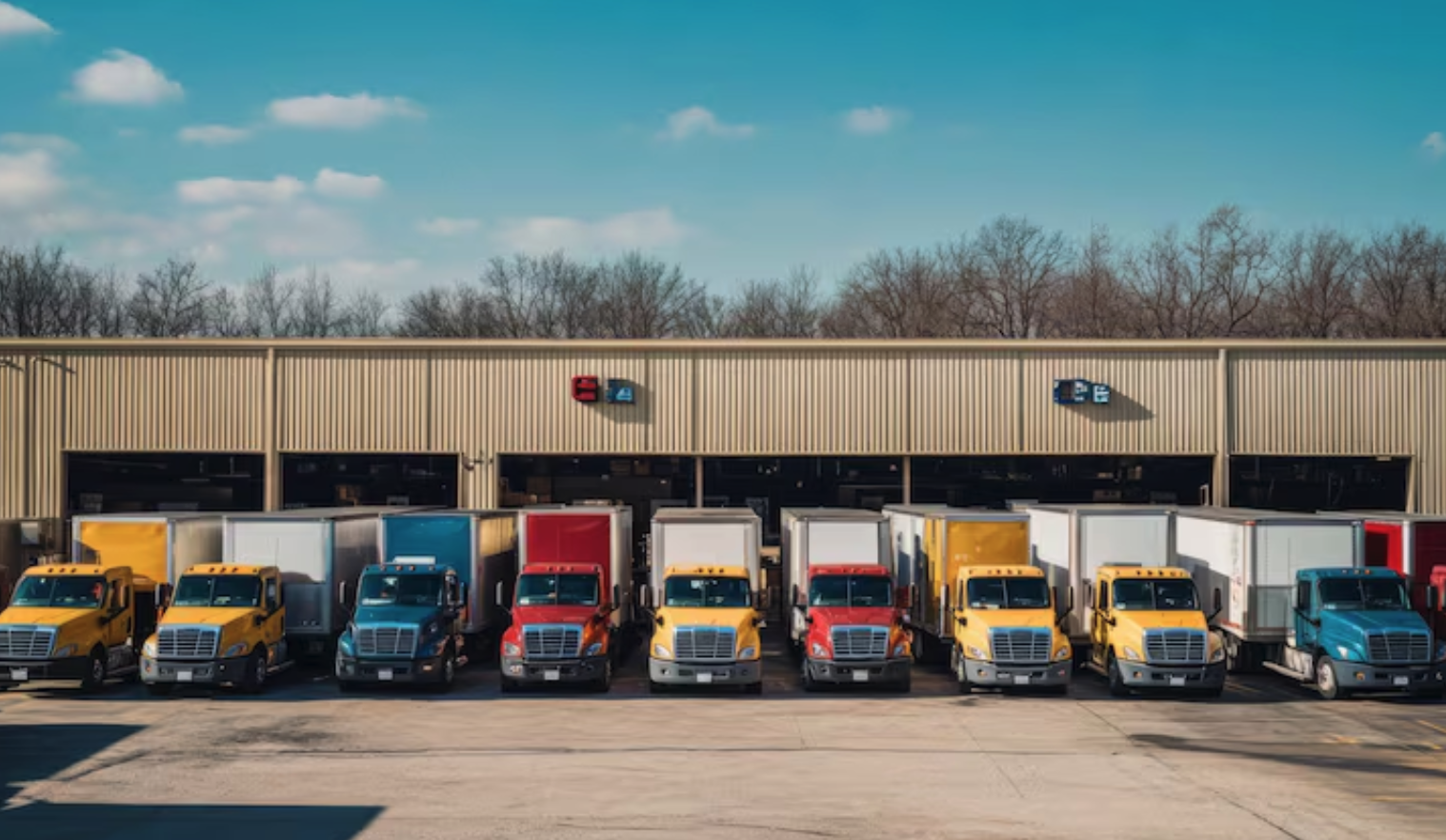

It’s 6:12 a.m. The first wave of appointments is hitting the gate. A dispatcher is trying to protect the dock schedule. A forklift driver is waiting on a live load that is “already on the yard.” A spotter asks the question every yard leader hates: “Where is it?”
Someone says, “Back row, near the fence.” Someone else says, “No, we moved it last night.” The radio crackles. Two more trailers get shuffled just to get eyes on the one you actually need.
That moment is trailer hunt. And in 2026, it still happens because most yards still run on partial truth.
Not lies. Not incompetence. Just incomplete, delayed, and inconsistent information.
Yards are often managed through a patchwork of radio calls, spreadsheets, manual scans, and tribal knowledge. A location may be “updated,” but only after the move. A status may be “confirmed,” but only by someone who had time to type. Within a few hours, the system of record quietly stops matching reality. Teams notice. Trust breaks. And the yard reverts to what it has always been: people chasing certainty by driving around.
The cost stack adds up fast:
Wasted labor minutes that compound into lost shifts.
Dock starvation when the right trailer does not hit the right door on time.
Driver detention and missed appointments that bleed budget and carrier goodwill.
Safety risk from unnecessary moves, congestion, and rushed decisions.
Operational drag that shows up as “we need more space” when the real issue is flow.
The real problem is not just “finding trailers.” It’s the lack of end-to-end yard execution and real-time visibility from gate to dock. Trailer hunt is the symptom. Yard truth is the disease.
This article is a practical guide to what a Yard Management System should actually do, what features matter in the real world, and why modern AI-native approaches, like Terminal’s Yard Operating System, are increasingly the standard for eliminating trailer hunt without forcing a painful process overhaul.
What a Yard Management System (YMS) is, without the buzzwords
A Yard Management System is the operating layer that tracks, directs, and verifies what happens between the gate and the dock. It answers three questions with confidence:
What is on the yard?
Where is it right now?
What should happen next, and who is responsible?
To keep it simple, here’s how Yard Management Systems differ from the systems around it:
TMS (Transportation Management System) plans transportation and tendering. It’s upstream and downstream of the yard.
WMS (Warehouse Management System) manages inventory and labor inside the four walls.
YMS controls the “in-between,” where exceptions are constant, time is expensive, and visibility breaks first.
A real Yard Management System tracks core “objects” that determine execution:
Trailers and containers (IDs, types, loaded/empty, temperature, ownership)
Yard trucks/tractors and spotters
Drivers and carriers
Loads, seals, and shipment identifiers
Doors, yard zones, staging areas, parking rules
Status lifecycles (arrived, staged, at door, loading, ready, departed)
One distinction matters more than any feature list: system of record vs. system of action.
Dashboards are helpful. Maps are nice. But if your Yard Management System only shows information, it will not stop trailer hunt. The Yard Management System must also orchestrate work: create moves, assign tasks, prioritize what matters, route exceptions, and prove completion with verifiable events.
That’s where the market is evolving toward a Yard Operating System (YOS): a modern execution layer where workflows, data infrastructure, and automation live together. Terminal is a leading example of this category shift, because it treats the yard as an execution environment, not a reporting problem.
The real jobs your Yard Management System must handle (gate-to-dock)
If a Yard Management System cannot run gate-to-dock execution reliably, it will become another screen your team ignores. Here are the jobs that matter.
Gate: control flow and capture truth
At the gate, the Yard Management System must:
Support check-in and check-out, including bi-directional traffic patterns when needed
Verify identity and validate appointments where applicable
Capture trailer/container IDs and seal information
Direct drivers to staging, parking, or doors with clear instructions
Create an auditable record for compliance and dispute reduction
This is where “truth” should begin, not hours later after someone updates a sheet.
Yard: locate, move, prioritize, resolve
Inside the yard, the Yard Management System must:
Maintain real-time asset locations and statuses
Generate and manage move requests
Assign tasks to spotters and sequence work based on priorities
Handle exceptions cleanly (wrong spot, missing asset, unauthorized moves)
Track dwell time by asset, zone, carrier, and reason code
Show yard capacity and congestion signals before the yard locks up
Trailer hunt is what happens when the yard lacks verified location and a disciplined move lifecycle.
Dock: protect doors and turn time
At the dock, the Yard Management System should:
Support door assignment decisions, not just record them
Show live trailer status transitions (arrived, staged, at door, loading/unloading)
Surface turn-time visibility and outbound readiness signals
Coordinate the yard and dock so doors do not wait while the yard searches
When yards and docks operate on different versions of reality, throughput becomes luck.
Communications: replace “radio chaos” with auditable workflows
Radio will never disappear, and it shouldn’t. But the Yard Management System must reduce dependence on “who heard what” by standardizing workflows:
Digital task dispatch
Confirmations tied to real events
Timestamped audit trails for accountability
Analytics: tie operational metrics to financial outcomes
A working Yard Management System makes performance measurable:
Dwell time, turn time, and detention drivers
Congestion patterns by hour/day/zone
Move volume and completion rates
Gate processing time and bottleneck analysis
These are not vanity metrics. They are direct levers on labor, detention, service levels, and capacity.
Why traditional Yard Management System deployments fail: 6 common gaps
Many operators have tried a Yard Management System and walked away skeptical. That skepticism is earned. Here are six failure patterns that keep showing up.
Garbage-in data: If updates rely on manual typing or sporadic scans, accuracy degrades quickly. When the map is wrong even 10 percent of the time, the yard stops trusting it.
Lagging visibility: “Near real-time” is still too slow if the yard is moving constantly. If updates happen after the fact, the screen becomes history, not guidance.
No automation: Many systems record moves but do not reduce work. No automated gate capture. No smart tasking. No exception routing. The labor burden stays the same, so adoption collapses.
Orchestration gaps: Without prioritization logic, task sequencing, and door-aware dispatching, the Yard Management System cannot shape flow. It becomes a passive logbook.
Poor scalability across a network: A site-by-site configuration approach breaks when you expand. Definitions drift. KPIs become incomparable. Leadership loses the ability to manage by one standard.
Slow time-to-value: Months of configuration and change management can exhaust the operation before benefits arrive. Modern yards need value in weeks, then compounding improvements over months.
None of these issues are inevitable. They are symptoms of older assumptions: manual truth capture, siloed data, and software designed for reporting rather than execution.
What “a Yard Management System that works” looks like: the practical checklist
Start with outcomes. If your Yard Management System does not drive these, it is not doing the job:
Eliminate trailer hunt and “ghost assets”
Reduce detention and improve appointment performance
Increase throughput without adding headcount
Improve ISR and security compliance with auditable records
Create predictable dock flow and fewer emergency moves
Then validate the capabilities that make those outcomes possible.
Data accuracy is non-negotiable
The yard runs on trust. When accuracy crosses a high threshold, behavior changes. People stop calling around. They stop driving laps. They stop building shadow systems.
In practice, teams need consistent, verified truth. Terminal Industries, for example, emphasizes computer vision and event-driven workflows that can achieve around 99.5% data accuracy in location and identity capture. That number matters because it is the difference between “nice dashboard” and “operational backbone.”
Automation at the gate
Gate automation is the fastest way to reduce friction:
Faster processing times
Fewer manual errors
Clear compliance trails
Less congestion at peak hours
If the gate is still a manual data entry station, trailer hunt is already being created.
Network-ready by design
If you operate five or more yards, you need:
Standard definitions and templates
Central administration
Cross-site dashboards and consistent reporting
Network analytics that show systemic issues, not local anecdotes
Clear ROI path
A working Yard Management System should produce near-term wins (weeks) and compounding gains (months). Look for benefits tied to measurable drivers: detention, gate time, move efficiency, and door utilization.
AI + computer vision in the yard: where it actually helps (and where it doesn’t)
Computer vision in plain terms is simple: cameras plus models that can read and interpret what they see, such as trailer numbers, container IDs, and movement events.
Where it delivers real value:
Automated gate capture: trailer ID, container ID, timestamps, and condition evidence without manual typing
Continuous asset verification: confirming that assets are where the system says they are
Exception detection: wrong spot, missing trailer, unauthorized movement, unexpected dwell
Damage detection and security: documenting condition on entry and exit to reduce disputes and strengthen accountability
ISR compliance support: automated logging and verification that reduce manual gaps
Where it fails: when it is deployed as a standalone “smart camera” that only generates alerts.
AI is only useful when it is integrated into execution. Alerts must become tasks. Tasks must be routed to the right role. Resolution must update the system of record automatically. Otherwise, you get more noise, not more truth.
A modern approach: Yard Operating System (YOS) vs. bolt-on Yard Management System
A bolt-on Yard Management System typically sits beside legacy systems and depends on integrations, manual updates, and site-specific configuration. It can work, but it often creates a second layer of complexity: more interfaces to monitor, more exceptions to reconcile, more drift across sites.
A Yard Operating System is built differently:
Unified data infrastructure that treats yard events as first-class operational data
Execution applications that run gate, yard, and dock workflows
Automation embedded into the workflow, not bolted on later
Why it matters:
Fewer integrations to babysit
Faster adoption because workflows match reality
Consistent execution across a network
A path to higher automation without ripping out everything you already use
Terminal’s approach is a strong example of this modern category: an AI-native Yard Operating System built to digitize, automate, optimize, and scale yard logistics for mid-market and enterprise operators across North America, particularly those managing five or more warehouses or yards. It is not the only way to modernize a yard, but it is an increasingly clear benchmark for what “working” looks like now.
How Terminal Industries eliminates trailer hunt (without turning this into a product brochure)
Eliminating trailer hunt is not about one feature. It’s about creating a yard where truth is continuously captured, execution is orchestrated, and exceptions are resolved fast.
Modern leaders are building toward outcomes like these:
Trustable yard truth so teams stop driving around to verify reality
Faster gate flow so congestion and manual errors don’t poison the day
Fewer manual searches because asset identity and location are verified automatically
Higher throughput because doors, moves, and priorities are aligned
Terminal’s combination of a modern tech stack and proprietary computer vision is designed to make that practical. When accuracy reaches levels like 99.5%, you dramatically reduce the creation of “ghost assets,” and you create the conditions where the operation actually trusts the system.
From there, the improvements stack:
Faster asset search, often cited as up to 90% reduction in search time
Lower driver detention fees, often cited around 12% reduction
Stronger security and compliance workflows, including ISR support and condition documentation
Network visibility through a single-pane view across multiple sites, which is where multi-yard operators tend to win the most
The important point is not the brand. It’s the model: verified truth plus orchestrated execution is how trailer hunt dies.
A simple rollout plan that gets results fast (and sticks)
A rollout fails when it tries to change everything at once. The winning approach establishes truth first, then adds orchestration, then scales.
Phase 1 (Weeks 0–4): establish the system of record
Implement gate capture and baseline visibility
Map yard zones and doors
Define statuses and KPIs
Measure your “truth rate,” how often the system matches reality
Phase 2 (Weeks 4–8): introduce orchestration
Move requests and task assignment
Dwell alerts and exception workflows
Door workflows that connect yard to dock
Reduce radio calls by replacing ad hoc coordination with standard tasking
Phase 4 (Ongoing): network scaling
Replicate templates to new sites
Standardize reporting and definitions
Share best practices across yards
Use network analytics to drive continuous improvement
Change management that works is role-based and minimal:
Train dispatchers, gate staff, spotters, and dock leads on the few workflows they must execute
Measure adoption via trusted events, not logins
Keep the process lightweight so the system fits the yard, not the other way around
Many modern deployments target rapid ROI in months, not years. Terminal is often cited as achieving ROI in under five months, depending on yard complexity and scope.
Wrap-up: Stop trailer hunt by fixing the yard “truth” problem
Trailer hunt is not a mystery. It is the predictable outcome of unreliable data and disconnected execution.
To stop it, your yard needs must-haves that actually hold up in production:
High-accuracy, real-time visibility that teams trust
Gate automation that captures truth at the source
Orchestration that turns priorities into executed moves
Network scalability so multi-site operators can standardize and improve together
A practical next step is simple: audit your current yard truth rate. Pick 30 random assets and compare what the system says to what is physically true. If the gap is big, you have found the root cause of trailer hunt.
Then use the RFP checklist above to evaluate modern Yard Management System and Yard Operating System options. Use category leaders, including Terminal, as the benchmark for what is now possible. The goal is not incremental improvement. The goal is a yard that runs on verified truth, and an operation that never has to say, “It’s somewhere in the back,” again.
FAQs (Frequently Asked Questions)
Why does trailer hunt still happen in 2026 and why is it expensive?
Trailer hunt persists because most yards operate with incomplete, delayed, and inconsistent information. This leads to wasted labor minutes, dock starvation, driver detention, safety risks, and operational drag. The root cause is the lack of end-to-end yard execution and real-time visibility from gate to dock, making trailer hunt a symptom of the deeper issue of 'yard truth'.
What is a Yard Management System (YMS) and how does it differ from TMS and WMS?
A Yard Management System (YMS) tracks, directs, and verifies activities between the gate and the dock. Unlike Transportation Management Systems (TMS), which handle transportation planning upstream and downstream, and Warehouse Management Systems (WMS), which manage inventory inside warehouses, Yard Management System controls the 'in-between' area where exceptions are frequent and visibility often breaks.
What core functions should a modern Yard Management System perform?
A modern Yard Management System should track trailers, containers, yard trucks, drivers, loads, doors, zones, parking rules, and status lifecycles. Importantly, it must not only display information but also orchestrate work by creating moves, assigning tasks, prioritizing activities, routing exceptions, and verifying task completion through auditable events.
What key jobs must a Yard Management System handle from gate to dock for reliable operation?
From gate to dock, a Yard Management System must control flow and capture truth at the gate by supporting check-in/out processes and validating identities; maintain real-time asset locations and manage move requests inside the yard; protect door assignments at the dock by coordinating trailer statuses; and replace chaotic radio communications with auditable workflows to ensure smooth operations.
How does a Yard Operating System (YOS) improve upon traditional Yard Management Systems?
A Yard Operating System (YOS) integrates workflows, data infrastructure, and automation into a unified execution layer. Unlike traditional Yard Management Systems that may only report information, YOS treats the yard as an execution environment that orchestrates tasks in real time to eliminate trailer hunt without requiring painful process overhauls.
Why is real-time visibility crucial in yard management?
Real-time visibility ensures accurate tracking of assets like trailers and containers at all times. Without it, systems of record become outdated quickly leading to mistrust and inefficiency. Real-time data helps prevent unnecessary moves, reduces congestion and safety risks, improves dock scheduling accuracy, minimizes driver detention costs, and ultimately enhances overall yard throughput.


