Walk a logistics buyer through three vendor demos this year and all three will say the same four words: "AI-powered computer vision." A camera reads a license plate on the screen, a number populates a field, and everyone nods. It looks like the same technology.
It isn't. And the gap between what those demos are actually doing is the difference between a faster clipboard and a system that runs your yard.
Most of what gets sold as "vision at the gate" is optical character recognition. OCR is real, it's useful, and it's also forty years old. Terminal does something categorically different. Understanding why matters, because the buyers who can't tell the two apart are the ones who write off "computer vision" after a disappointing pilot, when what disappointed them was never computer vision at all.
What OCR actually does, and where it stops
OCR has one job: turn a picture of text into a string of characters. Point it at a license plate and it gives you the plate number. Point it at a trailer and it reads the ID stenciled on the door. That's it. That's the entire capability.
It's the same technology that scans a check or digitizes a paper form, aimed at a truck. When a gate vendor says "our camera reads the plate," they are describing OCR, and they are describing the ceiling of what the system can do, not the floor.
Here is the part the demo doesn't show you. After OCR reads the characters, a human still has to do everything that matters. Is this truck on today's appointment list? Which dock is open? Is the carrier legitimate? Is that a trailer or a container, and does it need fuel or a power connection? Is there fresh damage on the panel? OCR can't answer any of that. It hands you a number and walks away. Your guard, your dispatcher, and your clerk pick up exactly where they always did.
That's why so many "smart gates" don't feel smart. They digitized the slowest keystroke at the gate and left the actual work untouched. You replaced a guard writing a plate on a clipboard with a camera writing a plate to a database. Faster data entry is not a transformed yard.
What Terminal does that OCR can't
Terminal's computer vision is built in three layers. OCR is one small piece of the first one.
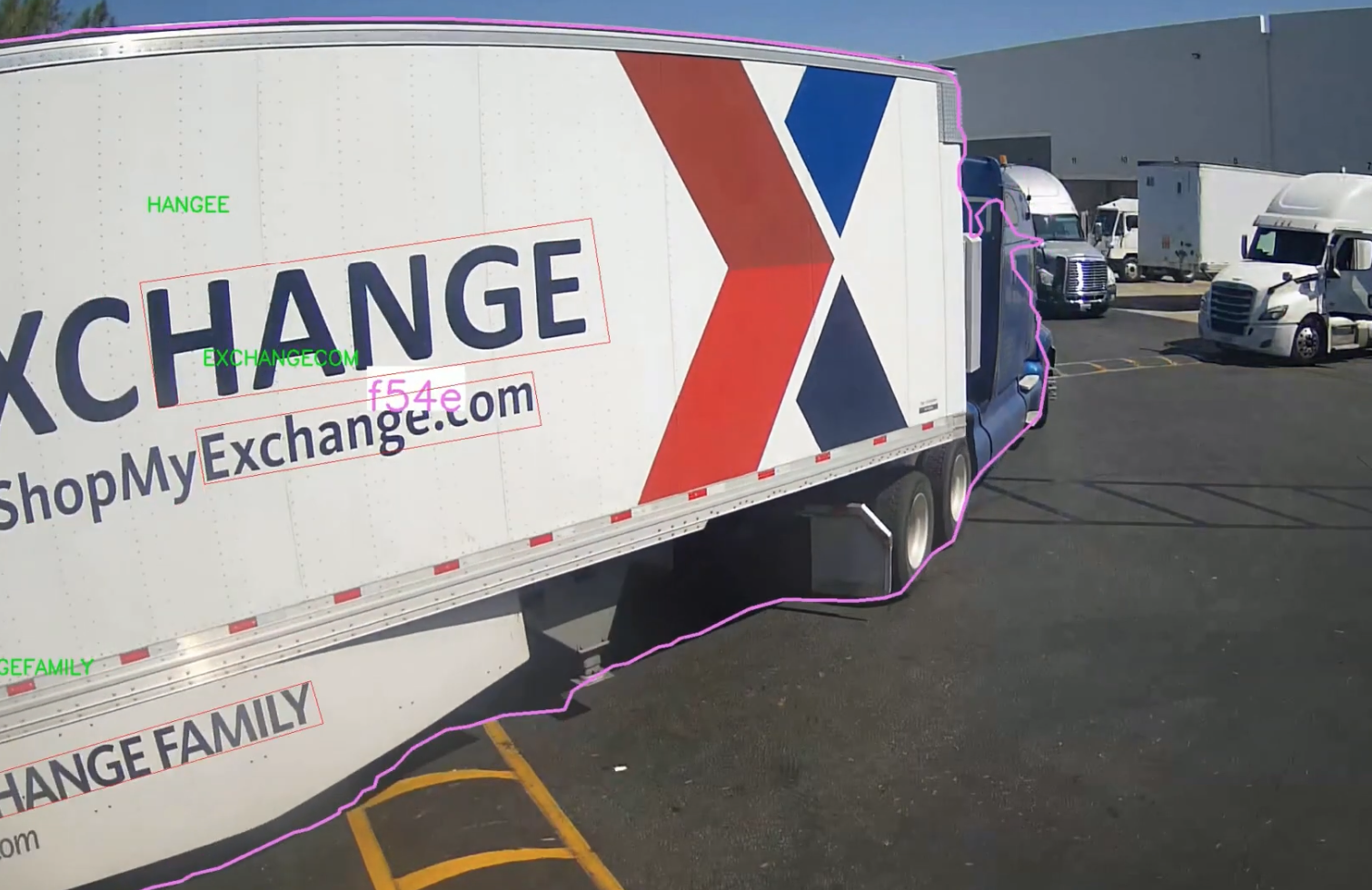
It reads. Yes, Terminal captures the text: license plate, USDOT and motor carrier number, VIN, and trailer, container, and chassis IDs. This is the part that looks like OCR, except it runs against the industry's largest yard-specific data models and lands above 50% improvement over manual capture, which is why Ryder's Karen Jones called the accuracy "a significant milestone in the race to modernize the yard." No RFID, no BLE tags, no specialized rigs. Off-the-shelf cameras, because the intelligence lives in the software, not on the pole.
It classifies and understands the scene. This is where OCR ends and computer vision begins. Terminal doesn't just read characters, it identifies what it's looking at. Trailer versus container versus chassis. Container size and type. Class and fuel type. Carrier logos. Seal presence and seal number. The operating state of a reefer unit, set temperature and current reading off the display. The condition of the asset on the way in. OCR sees a string. Terminal sees the truck, the trailer, the load, and the state they're all in, and it understands that scene the way an experienced yard worker would, every time, on every lane, without getting tired at shift change.
It acts. A read and a classification are still just data until something happens. Terminal turns what it sees into the next move automatically. If the truck matches the appointment and the carrier clears, the gate opens and the trailer registers as on-yard. If the carrier's risk score says hold, the truck is stopped before the arm ever lifts. A reefer below its fuel threshold doesn't get admitted. A container gets routed differently than a trailer, with the right yard action surfaced for the right asset in the right spot. We connect these into what we call Missions: multi-step, traceable movements from gate to dock that the system orchestrates on its own.
OCR gives you a record. Terminal makes a decision.
The difference, in one line
Legacy systems, and the OCR-at-the-gate tools bolted onto them, record what already happened. Terminal orchestrates what happens next.
OCR is the purest example of recording. It is, quite literally, a machine for writing down what it saw. That has value, the way a faster typist has value. But it leaves you reactive. You still find out about the problem after the truck is inside the fence, after the wrong trailer left the dock, after the reefer drifted out of range, after the fraudulent carrier drove off with the load.
As we put it when we launched our security layer: a fraudulent carrier at the gate at 9:14 AM is not a ticket to be reviewed later. It is a decision that has to be made before the gate arm opens. OCR can write down that the truck arrived. Only a system that sees, understands, and acts can stop it.
The hard part isn't the vision. It's operationalizing it.
Here's the fair objection a sharp buyer raises next: if reading, classifying, and acting is the bar, couldn't any computer vision vendor clear it? In a demo, maybe. In a live yard, across hundreds of sites, in the rain, at 2 AM, on every asset that rolls in, it's a different problem entirely. Operationalizing computer vision for the yard is where the real difference lives, and it's the part you can't see in a slide.
Four things make Terminal's vision work in the field, not just in the deck.
The models keep getting better. A computer vision system you install is a system that starts aging the day it goes live. Ours is the opposite. We are constantly training and updating our models, so accuracy improves and the range of what the system can recognize and act on expands over time. The yard you deploy this quarter is running a more capable system next quarter, with no forklift upgrade.
It tunes to your yard, not a generic one. No two yards are the same. Layouts, lighting, lane configurations, asset mix, regional plates, and local quirks all differ, and a frozen one-size-fits-all model breaks on the exceptions, which in a yard is most of the day. Terminal's vision system adapts and tunes to the specific conditions and use cases in the field, so it performs on your operation as it actually runs, not on the clean version in a brochure.
It's one vision system used many ways, not a pile of point tools. This is the part competitors can't reverse-engineer from a feature list. Terminal's gate capture, real-time location across the yard, and perimeter security are not three products from three vendors stitched together. They are the same vision system applied to different jobs, sharing one data model and one source of truth. The plate the gate read is the same asset that RTLS is locating and the same one security is watching. Buy three point solutions and you get three silos that don't talk to each other. Build on Terminal and every capability inherits from the same vision layer, which is exactly why the system interlocks instead of leaking at the seams.
We know the yard. This is not a science project. The hardest part of putting AI vision into a yard isn't the AI, it's knowing what a yard actually does: how drop-and-hook differs from a live load, why a spotter move happens when it does, what a gate guard is really checking for. Terminal pairs deep vision and AI engineering with deep logistics operating experience across the whole company, from development and engineering to go-to-market, deployment, and support. We were founded by operators (Ryder, NFI, Lineage, and Prologis) for exactly that reason. The vision technology is necessary. Knowing the yard is what makes it work.
What this translates to in the yard
The category difference shows up as business value in four places an operator can actually measure.
Speed and throughput. Vision capture and automated check-in move a truck through the gate in seconds instead of the fourteen minutes a manual gate averages. Multiply that across every arrival and you cut dwell, shrink detention exposure, and turn the yard faster without adding a lane or a clerk.
Labor. Computer vision does the work people used to do on foot. The system always knows what's in the yard and where it sits, so your team stops walking the lot to count assets, and the gate, dispatch, and yard-check roles that OCR left fully staffed start to come down.
Errors and claims. Reading the plate right is table stakes. Confirming the right trailer is at the right door with the right freight before it moves is what prevents mis-ships, OS&D claims, and broken chain of custody. Classification and verification do that. OCR doesn't.
Fraud and compliance. Carrier risk gets scored before the truck arrives. Driver identity gets matched to the appointment. Conveyance condition and seal numbers get captured as a timestamped, photo-backed record, the kind of CTPAT-grade inspection most yards still do on paper, if they do it at all. That record is the difference between defending a claim and eating it.
Across these, the outcome our customers see is 4x or more ROI inside the first year, on a platform that goes live in as little as five days. You don't get that from reading characters faster. You get it from a system that runs the yard.
The takeaway for buyers
Stop evaluating gate cameras on whether they can read a plate. They all can, more or less, and reading the plate was never the hard part.
Start asking the question that separates a faster clipboard from a transformed operation: after the camera reads it, who decides, and who acts? If the answer is still your guard, your dispatcher, and your clerk, you bought OCR. If the answer is the system itself, you bought computer vision.
That's the line. And it's the whole game.
:quality(85))
:quality(85))
:quality(85))
:quality(85))
:quality(85))
:quality(85))
:quality(85))
:quality(85))
:quality(85))
:quality(85))
:quality(85))
:quality(85))
:quality(85))
:quality(85))
:quality(85))
:quality(85))


